Industries / Heritage Restoration Historic Sites & Digital Preservation

Heritage Restoration Historic Sites & Digital Preservation

Precision 3D scanning, digital modeling, and physical replication for historic restoration, digital archiving, and museum exhibit replicas nationwide.

Our Process

3D Scanning & Fabrication

01
On-Site 3D Scanning
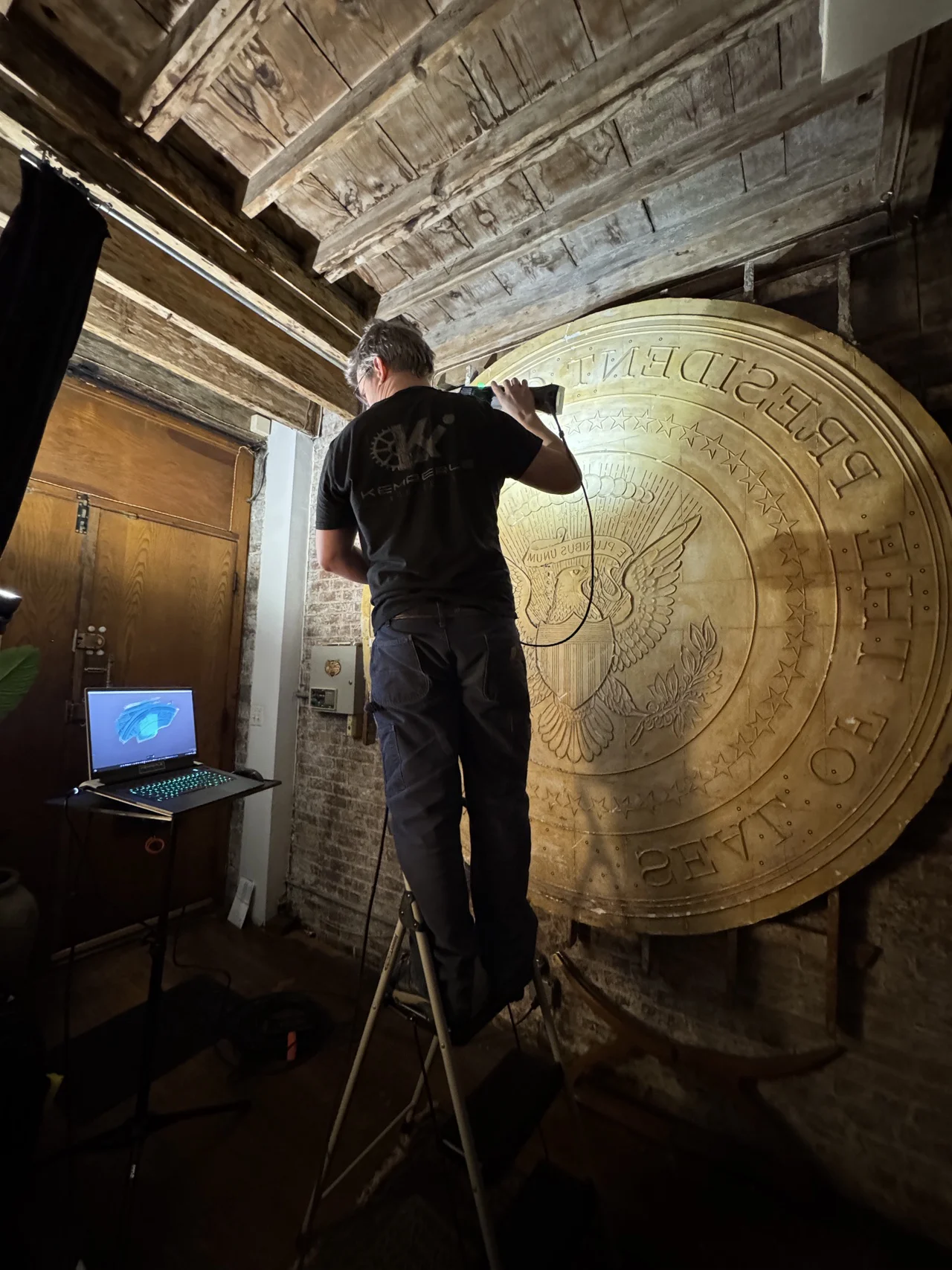
We bring non-contact scanners to the site to capture fragile, embedded, or immovable elements without disturbing the original material, including undercuts and deteriorated surfaces that are difficult or impossible to trace or mold by hand.
02
Digital Modeling & File Prep
Raw scan data becomes a clean, watertight digital model, ready for archiving, 3D printing, or CNC routing. Damage and prior repairs are digitally corrected, restoring the element to its original intended profile before any physical work begins.
03
Physical Replication
Using plaster, wood, resin, and other materials, we fabricate replacement elements, exhibit replicas, or archival study models matched for scale, profile, and surface texture down to the finish coat — whether the piece returns to its original structure or stands on its own for display.
04
Hybrid Workflows
Digital sculpting and CAD modeling move alongside traditional hand-finishing, protecting craftsmanship while adding speed and precision — a master patternmaker still does the final finishing pass on every piece before it leaves the shop.
Heritage & Restoration
3D Scanning a Presidential Seal Mold - full view

Our Services for Heritage & Architectural Restoration

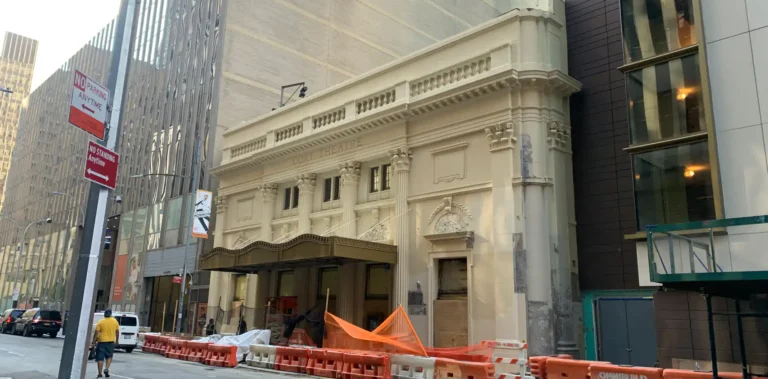
Kemperle Industries provides heritage restoration and architectural conservation services built around precise, non-contact 3D scanning, capturing the geometry of historic plasterwork, moldings, and architectural detail before a single hour of hand-fabrication begins. Whether you’re restoring a landmark theater interior, digitally archiving a fragile artifact, or producing a replica for exhibit, we start by documenting what’s actually there, not an approximation of it.

Most restoration projects run into the same problem: the original drawings don’t exist, the surviving detail is too fragile to mold by hand, or the damage is too extensive to trace by eye. Non-contact 3D scanning solves this by capturing complex, undercut, and deteriorated geometry, including ornamental plaster, decorative molding, and carved stone, as a precise digital record without touching or stressing the original material. That record becomes the basis for everything downstream: a cleaned-up CAD model, a 3D-printed pattern, or a traditional plaster or resin mold.

Our process supports historic preservation professionals, architects, museums, and restoration contractors from the initial site scan through the finished, installed replacement. From landmark theaters to privately held artifacts, we deliver high-resolution digital files, precise physical replicas, or both, matched to your project’s timeline and budget. Because scanning, modeling, and fabrication all happen under one roof, there’s no handoff between vendors, no lost tolerance between the digital file and the physical part, and no waiting on a third party to move the project forward.

If your project involves new ornamental work, such as custom plasterwork, millwork, or architectural detail for new construction rather than restoration of an existing element, see our dedicated Architecture & Ornamentation page.

We work with:

  • Architects & Preservation Firms
  • Contractors & Installers
  • Museums & Private Collectors
  • Plaster & Ornamental Trades
  • Municipal & Cultural Institutions

No existing drawings or files? No problem. Call 718-557-9578 or request a quote online to talk through scope and approach.

Get a Quote
What We Do

Our Expertise

Landmark Theaters & Civic Buildings
Ornamental Plaster
Replacement of decorative plaster and molded ornament for landmark and civic interiors, matched to surviving detail down to the tool marks. We scan the healthiest surviving section, and then digitally restore where needed, in order to produce a new master pattern that is then used to cast replacements that read as original from install distance and up close, including run moldings, rosettes, and figural elements.
Architects, Engineers & Preservation Planners
Condition Documentation & As-Built Surveys
High-accuracy 3D scanning to document the current condition of historic architectural detail — plasterwork, moldings, carved elements, and ornament — before a restoration project is scoped. Capturing deterioration, damage, and deviation from original design intent as a precise digital record gives architects and preservation teams the accurate as-built reference they need to plan scope and make fabrication decisions with confidence.
Museums & Private Collections
Digital Archiving & Museum Replicas
Non-contact scanning of fragile or one-of-a-kind objects, producing archival-quality digital records and physical replicas for exhibits, education, and study. Institutions can put a durable replica on view or in a classroom while the original stays protected in controlled storage, with the digital file preserved as a permanent record for future research, display, or conservation.
Scan Fidelity

From Scan Data to Finished Detail

Step 1
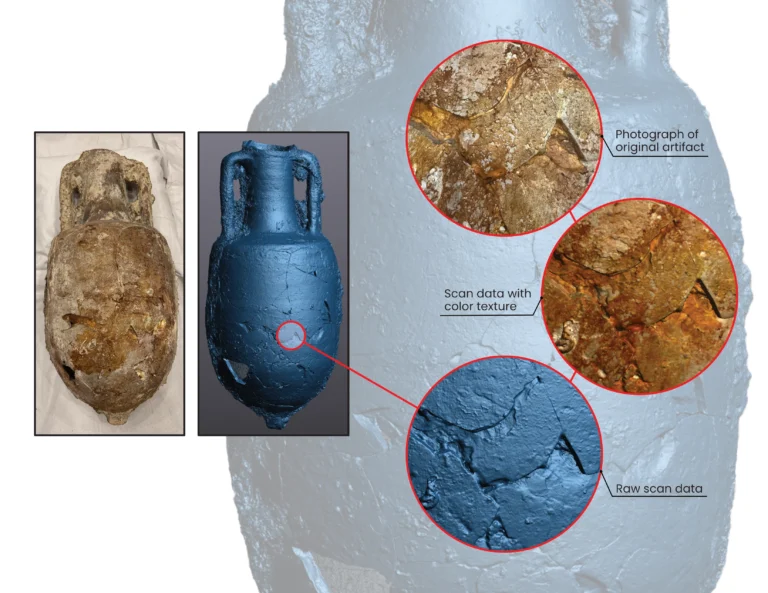
Raw Scan Mesh
Structured light and laser scanning capture high fidelity polygonal meshes, with zero physical contact. This is the raw geometric record before any cleanup, correction, or digital restoration work begins.
Step 2
Textured Digital Model
The mesh is cleaned, corrected for damage, and textured into a full color, dimensionally accurate model, ready for archiving, CAD reference, or direct fabrication into a physical replacement part.
Ready to Start Your Restoration Project?
Request a Quote →
error: Content is protected !!