Not sure what is the right path for your project?
We help clients choose between molding, 3D printing, machining, or hybrid workflows.
If you need a digital master first, explore our 3D Scanning Services or Reverse Engineering Services.
If direct digital production makes more sense, see our 3D Printing Services.
Our process is designed to produce consistent, high-fidelity parts from the first piece through full short-run production.
If made thick enough, silicone rubber molds are extremely versatile but don’t require a support material for the creation of a mother mold. Some characteristics of silicone rubber molds include but are not limited to:
There are generally two types of silicone rubber used in the molding process and they are referred to as tin-cure and platinum-cure. The major difference between the two is in the metal used to catalyze the respective rubber. In the case of tin-cure, tin is used to catalyze the rubber, and with platinum-cured, platinum is used.
Every rubber is subject to cure inhibition due to potential contaminants present on the surface of the object being molded. In general silicone rubber is sensitive to sulfur which is often found in a variety of modeling clays. In the case of Platinum-cure these rubbers are very sensitive to sulfur and in most cases will not cure at all if present.
Tin-cure on the other hand does not have a problem if the model contains sulfur as long as the model is first sealed. In most cases, tin-cure rubbers will be significantly less expensive than their platinum-cure counterparts.
Shrinkage is a major difference between these two rubbers both long and short term. In general, Tin-cure rubbers will exhibit higher shrinkage over time when things like rubber, casting material, and mold configuration are taken into account.
Library life is another important component to consider when choosing which rubber to work with. Tin-cure generally has a shorter library life when compared to Platinum-cure. When looking at Platinum-cure rubbers you want to think in decades for your library life whereas most Tin-cure rubbers are several years at best. Platinum-cure silicones are often used in historical preservation due to their extremely long library life.
One of, if not the most, common mold types. This process involves creating a thinner layer of rubber around the object and then encapsulating that in a harder material such as plaster or fiberglass. The end result creates a jacket-like effect. Of all mold types, matrix molds are said to be the most accurate. Some characteristics of matrix molds include but are not limited to:
Easier part ejection due to removable rubber sleeve. Being able to separate the rigid shell from the flexible sleeve aids in the removal of more complex parts.
Reparability is significantly enhanced due to the interchangeable nature of the parts.
Note: There are other types of molds including resin molds, polyurethane molds, collapsible core molds, and epoxy molds. Certain types of molds are passed depending on your industry, product, process, etc. Leave it up to Kemperle Industries to provide professional advice and suggestions on what type of mold is best suited to your needs.
These molds are made from a composite material consisting of fiberglass and resin. They offer several advantages, such as durability, flexibility, and ease of use. Fiberglass molds can be customized to create intricate designs and can withstand high temperatures during the casting process. Their smooth surface ensures precise replication of the original object.
Fiberglass molds are incredibly durable allowing them to sustain more abuse during the casting process.
When working with fiberglass certain safety measures are necessary to deploy to ensure the safety of those handling it. Adequate ventilation and the use of a respirator are amongst the most important of these measures. Some characteristics of fiberglass molds include but are not limited to:
High strength to weight ratio. These molds tend to be much lighter than traditional molds made of plaster. This gives you greater flexibility when working on a larger scale.
Why Choose Kemperle Industries?
When it comes to molding and casting, we have you covered. Our wealth of expertise and knowledge on the subject spans over 4 decades. When it comes to this tried and true art form there is almost no subject, mold type or challenge we have not encountered. By combining today’s technologies with the traditions of the past we are able to overcome new obstacles and challenges, while maintaining the absolute highest quality results.
molding and casting gallery
It is a long established fact that a reader will be distracted by the readable…
Why Choose Kemperle Industries?
When it comes to molding and casting, we have you covered. Our wealth of expertise and knowledge on the subject spans over 4 decades. When it comes to this tried and true art form there is almost no subject, mold type or challenge we have not encountered. By combining today’s technologies with the traditions of the past we are able to overcome new obstacles and challenges, while maintaining the absolute highest quality results.
Our molding and casting services are available to clients throughout the East Coast, including those seeking molding and casting in Delaware and molding and casting in Vermont.
Digital design services for molding and casting.
Mold and Cast Architectural Ornaments
Mold-and-Cast-Architectural-Ornaments.webp
Mold and Plaster Casting Architectural Elements
mold-and-cast-architectural-ornaments-2
Master Pattern Preparation
We begin with a master pattern provided by the client or developed in-house.
Typical starting points include:
Physical originals
Restored legacy parts
Reverse engineered CAD models
CNC machined masters
3D printed masters
The quality of the master directly determines the quality of the final resin casting.
3D-Print-Capital-e1771456646844.jpeg
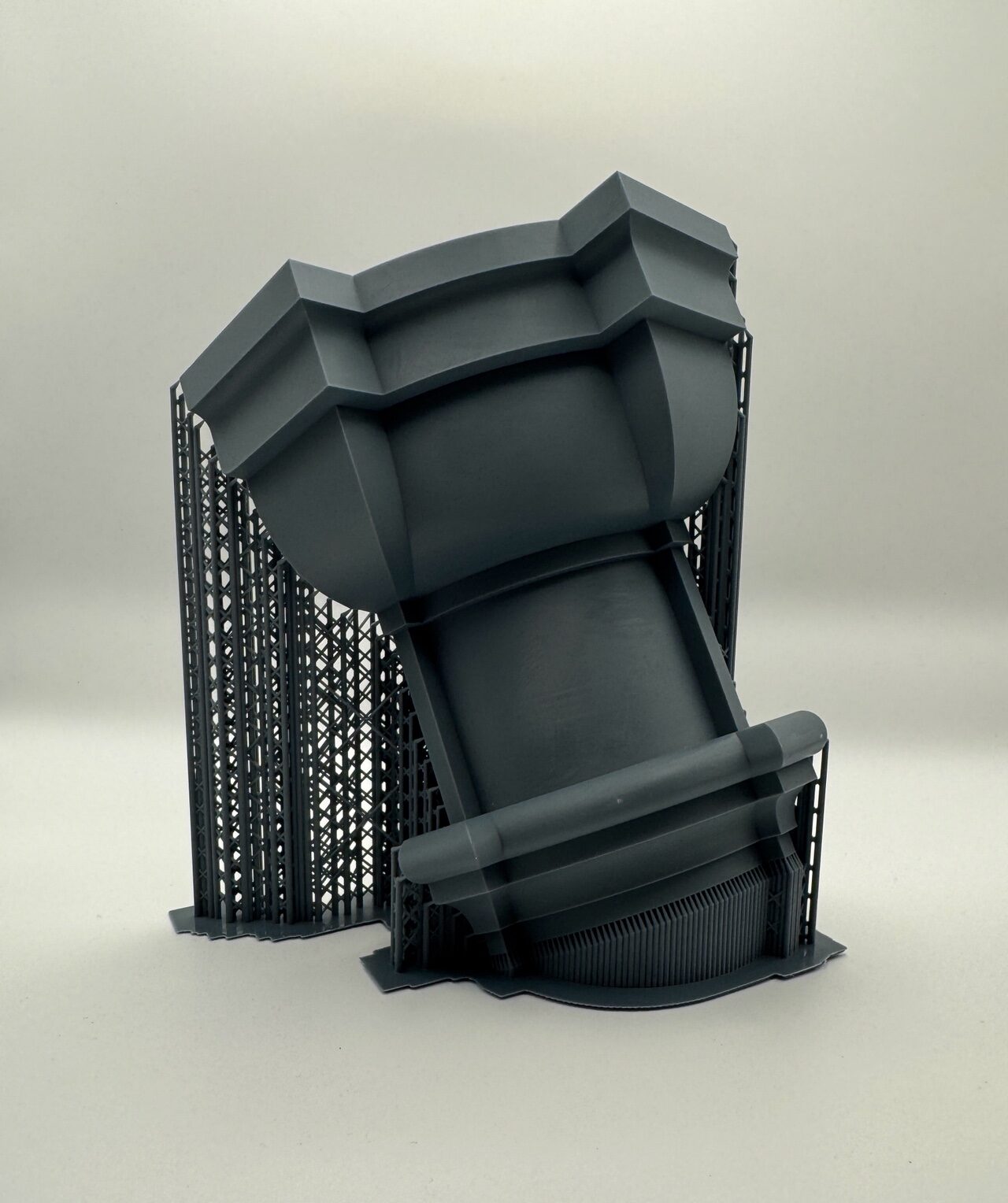
Custom Silicone Mold 3D Print Master Pattern
We fabricate custom silicone molds tailored to your geometry and production goals.
Our team evaluates:
Parting line strategy
Undercuts and release
Mold durability
Shrinkage considerations
Batch consistency
Each mould for resin casting is engineered to support predictable, repeatable output.
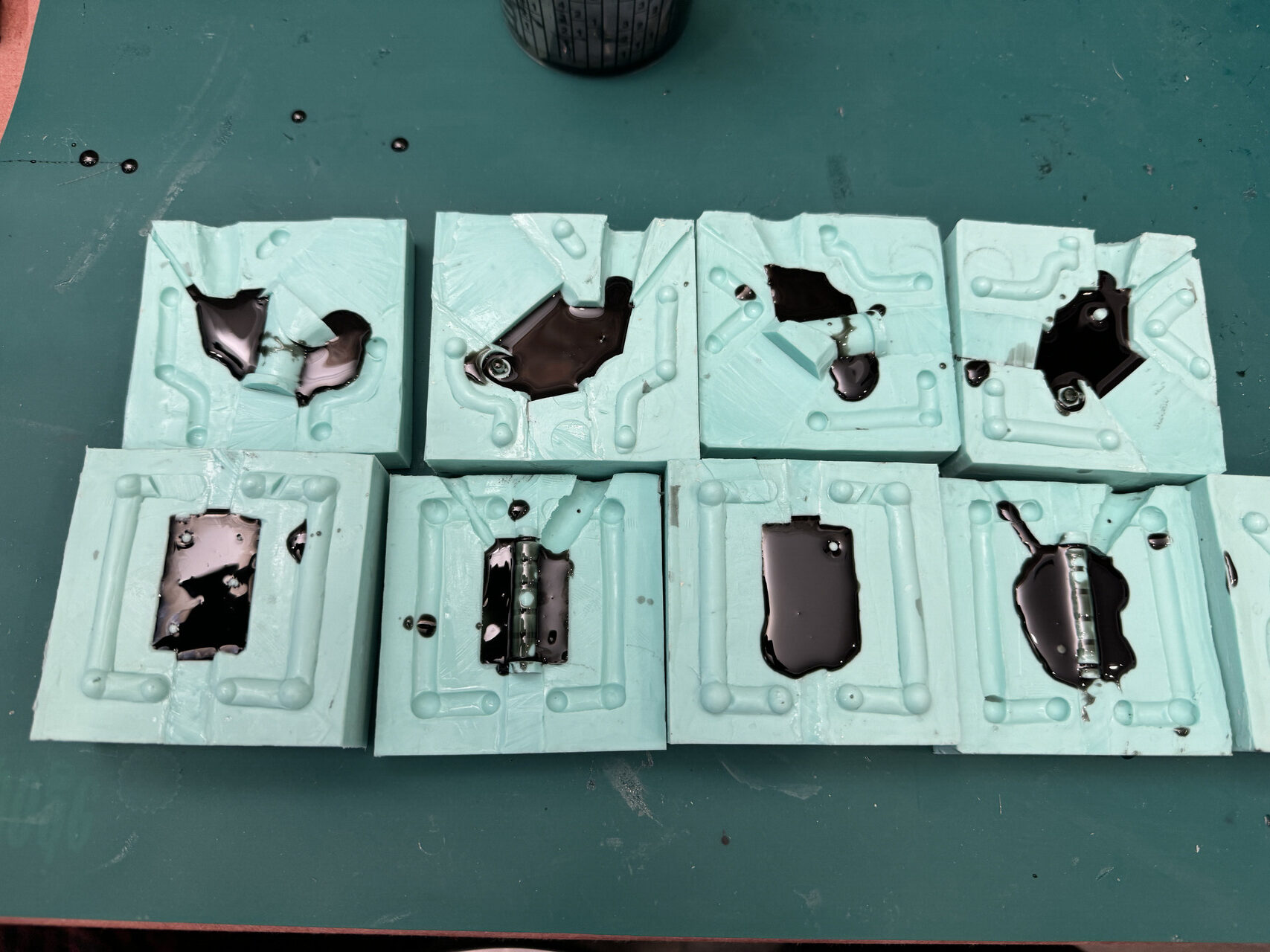
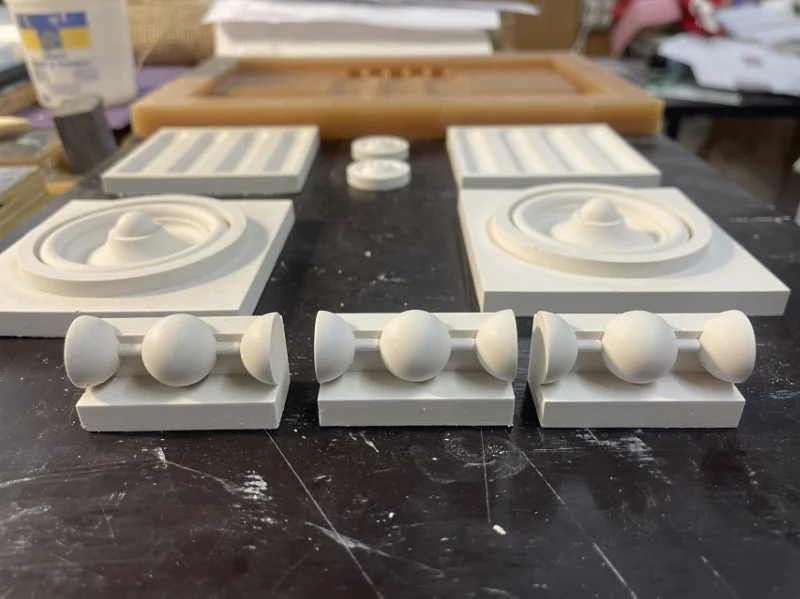
Silicone Molds Barcade Small Parts
Silicone-Molds-Barcade-Small-Parts-e1771456686712.jpeg
Silicone Molds Barcade Small Parts
silicone-molds-barcade-small-parts
With tooling complete, we run controlled casting batches with attention to:
Material consistency
Surface fidelity
Insert placement
Dimensional repeatability
Typical silicone tooling supports dozens to hundreds of parts depending on geometry and material.
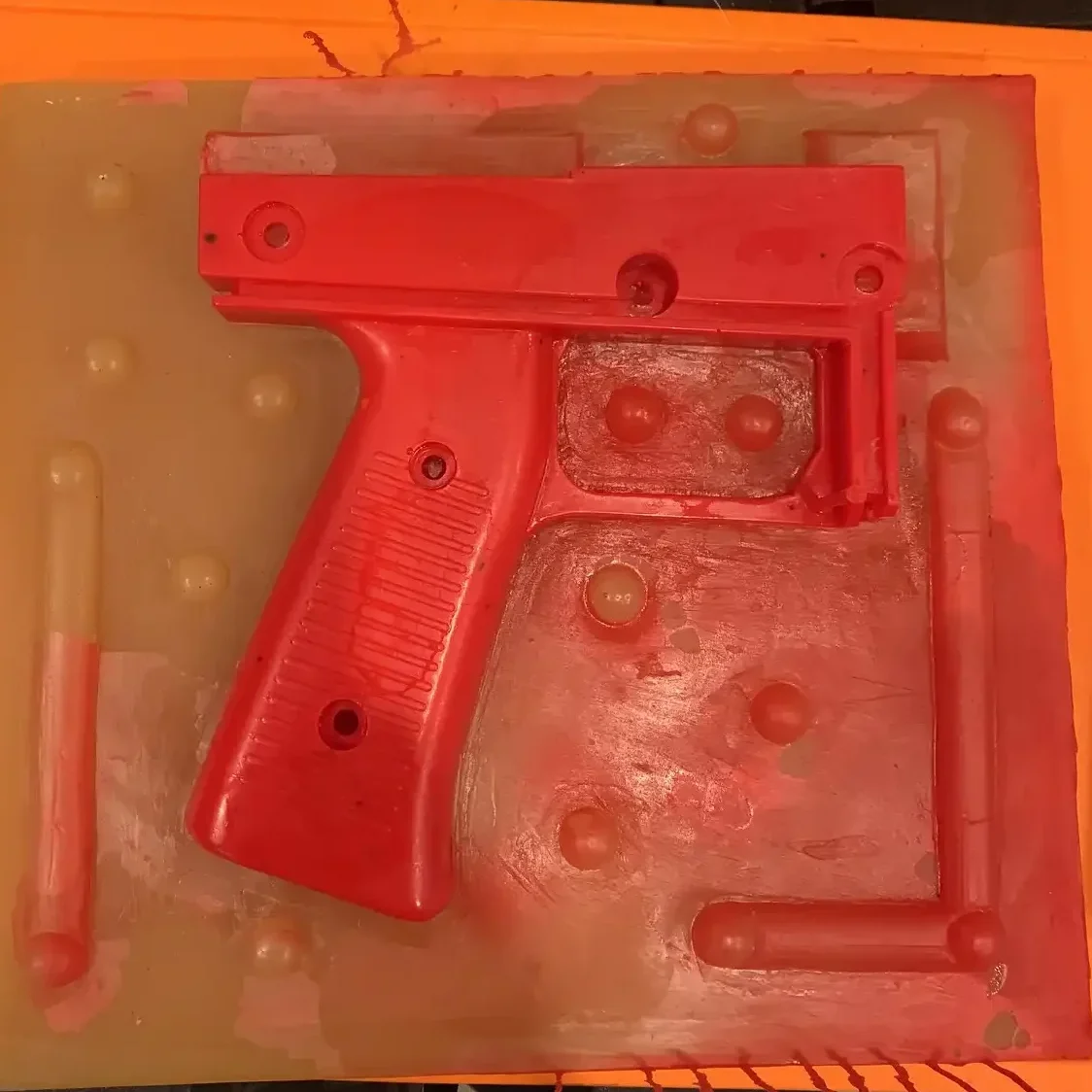
Silicone Mold Barade Gun Handle Red
Silicone-Mold-Barade-Gun-Handle-Red-e1771459268909.webp
Silicone Mold Barcade Gun Handle Red
silicone-mold-barade-gun-handle-red
Post-processing options include:
Flash trimming
Surface preparation
Paint and coatings
Metallic and specialty finishes
Hardware integration
Final assembly
Parts leave our shop ready for installation or deployment.
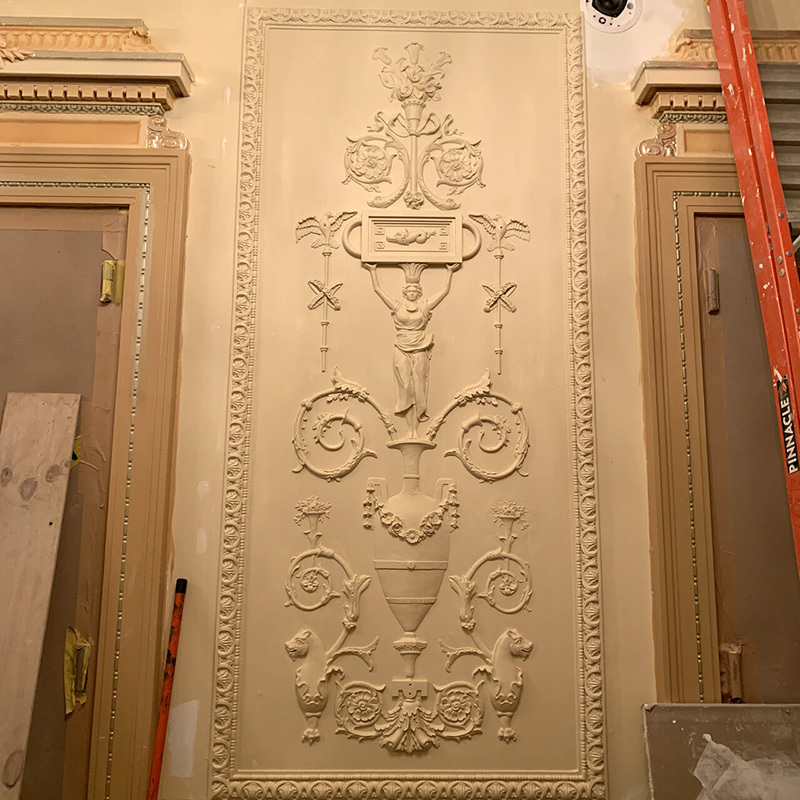
James Earl Jones Theater Ornamental Plaster
Full Wall Panel Installed in Theater
When Resin Casting Is the Right Production Method
Resin casting molds are often the best solution when:
You need repeatable parts without injection tooling
Surface detail must be preserved
Production volumes are moderate
Material realism is important
Geometry is complex
For one-off parts, 3D printing may be more efficient. For very high volumes, injection molding may be appropriate.
We help clients evaluate these decisions early, where cost and quality are most affected.
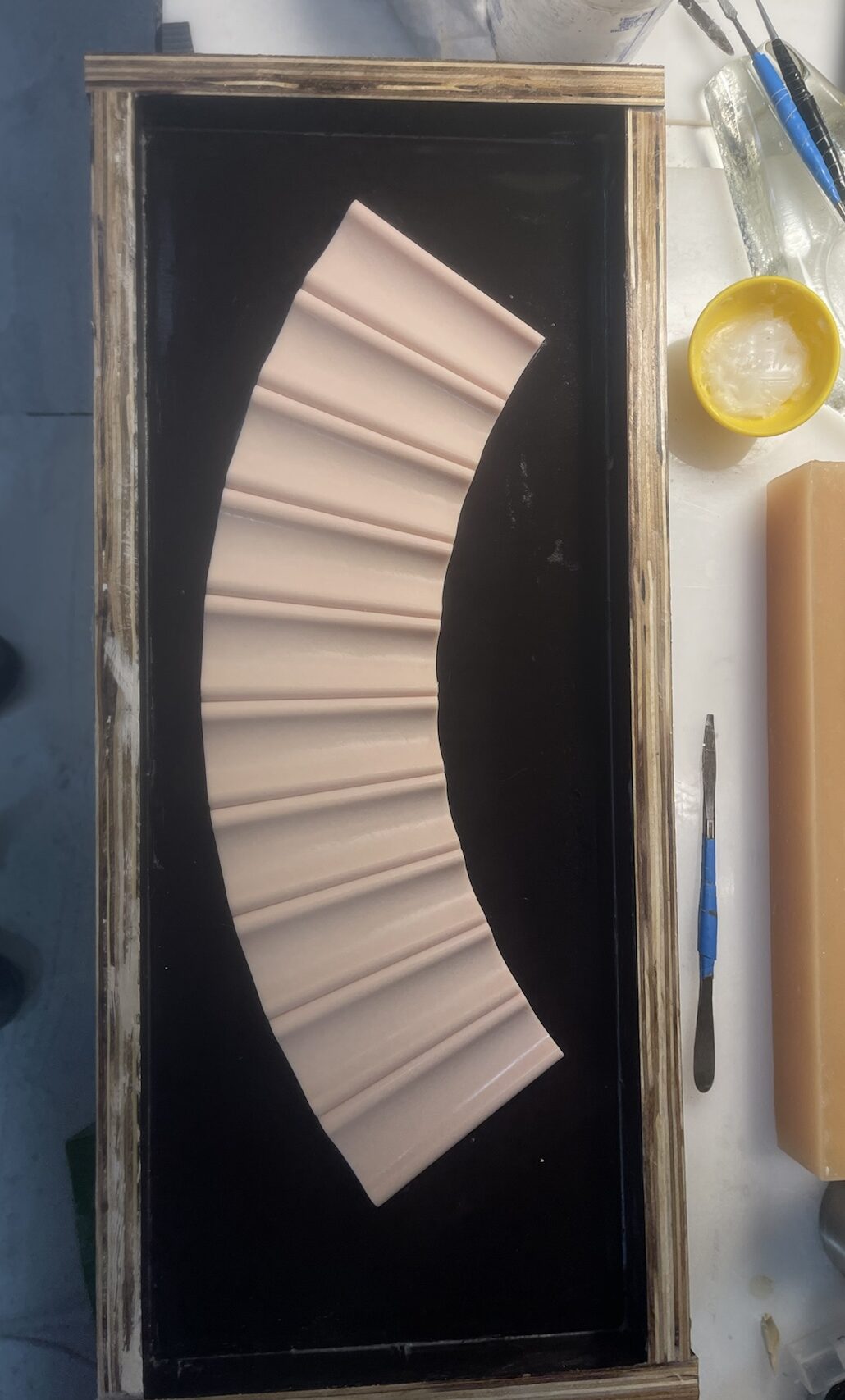
Mold Ornamental Medallion Section
Mold-Ornamental-Medallion-Section-e1771364241479.jpeg
Mold Section Ornamental Plaster Medallion
mold-ornamental-medallion-section
Typical Applications
Art Fabrication & Limited Editions
We support artists, studios, and fabricators with production-grade resin casting for:
Editioned sculptures
Complex organic forms
Large-format segmented casts
Material and finish experimentation
Gallery and public art fabrication
Ornamental Plaster & Architectural Restoration
High-detail custom silicone molds allow fragile or historic originals to be reproduced with minimal risk to the source object.
Ornamental plaster replication
Historic cornices and medallions
Decorative architectural details
Museum-quality reproduction
Lightweight replacement components
Aftermarket Automotive
Interior trim reproduction
Decorative components
Legacy part duplication
Retail & Experiential
Sculptural elements
Custom awards
Branded display objects
Lightweight scenic components
Arcade game parts
Custom props & merchandise
Frequently Asked Questions
How many parts can you make from a silicone mold?
Many resin casting molds support dozens to hundreds of parts depending on geometry and material. We evaluate expected tool life during quoting.
Can you create molds from 3D printed parts?
Yes. We regularly fabricate custom silicone molds from printed masters, machined parts, and physical originals.
What materials can be used for resin casting?
We offer rigid and flexible urethanes, clear systems, and specialty filled resins depending on performance needs.
Can you match the appearance of the original part?
In many cases, yes. Our resin casting process is designed to preserve fine surface detail, and we offer a range of finishing options including paint, metallic effects, and specialty coatings to closely match the original appearance.
Do you work with artists, fabricators, and architects?
Yes. We regularly support art fabrication studios, ornamental plaster specialists, architects, and experiential teams who need reliable resin casting molds and repeatable production.
Not sure what is the right path for your project?
We help clients choose between molding, 3D printing, machining, or hybrid workflows.
If you need a digital master first, explore our 3D Scanning Services or Reverse Engineering Services.
If direct digital production makes more sense, see our 3D Printing Services.
Typical Applications
Art Fabrication & Limited Editions
We support artists, studios, and fabricators with production-grade resin casting for:
- Editioned sculptures
- Complex organic forms
- Large-format segmented casts
- Material and finish experimentation
- Gallery and public art fabrication
Ornamental Plaster & Architectural Restoration
High-detail custom silicone molds allow fragile or historic originals to be reproduced with minimal risk to the source object.
- Ornamental plaster replication
- Historic cornices and medallions
- Decorative architectural details
- Museum-quality reproduction
- Lightweight replacement components
Aftermarket Automotive
- Interior trim reproduction
- Decorative components
- Legacy part duplication
Retail & Experiential
- Sculptural elements
- Custom awards
- Branded display objects
- Lightweight scenic components
- Arcade game parts
- Custom props & merchandise