Metrology & Inspection Services in New York City
Validate geometry. Verify tolerances. Build with confidence.
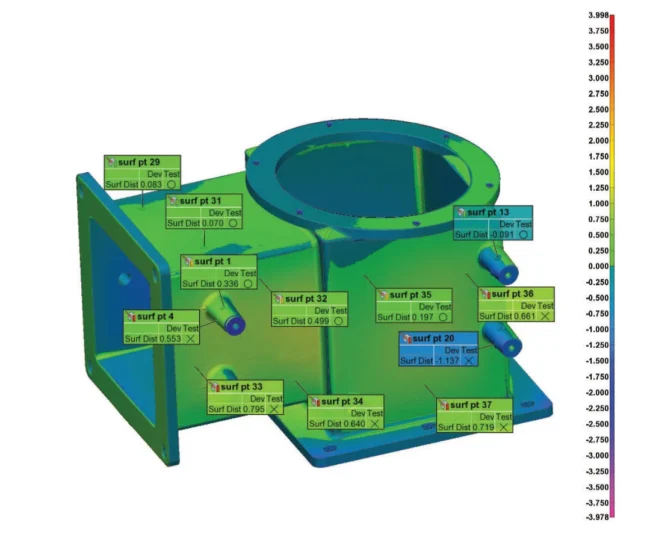
From scan-based inspection to first article validation, Kemperle Industries helps you identify deviations early, before they become costly manufacturing or installation issues. We compare real-world geometry to design intent, ensuring every part meets specification and performs as expected.
How Metrology Integrates with Your Project
Whether you need a standalone quality report or a full-scale production audit, our metrology services are designed to be modular. We integrate at any stage of your development cycle to verify accuracy and reduce risk.
Strategic Entry Points:
-
Standalone Inspection: Already have a part and a CAD model? We provide precision CAD-to-Part deviation analysis to validate your existing manufacturing or 3D prints.
-
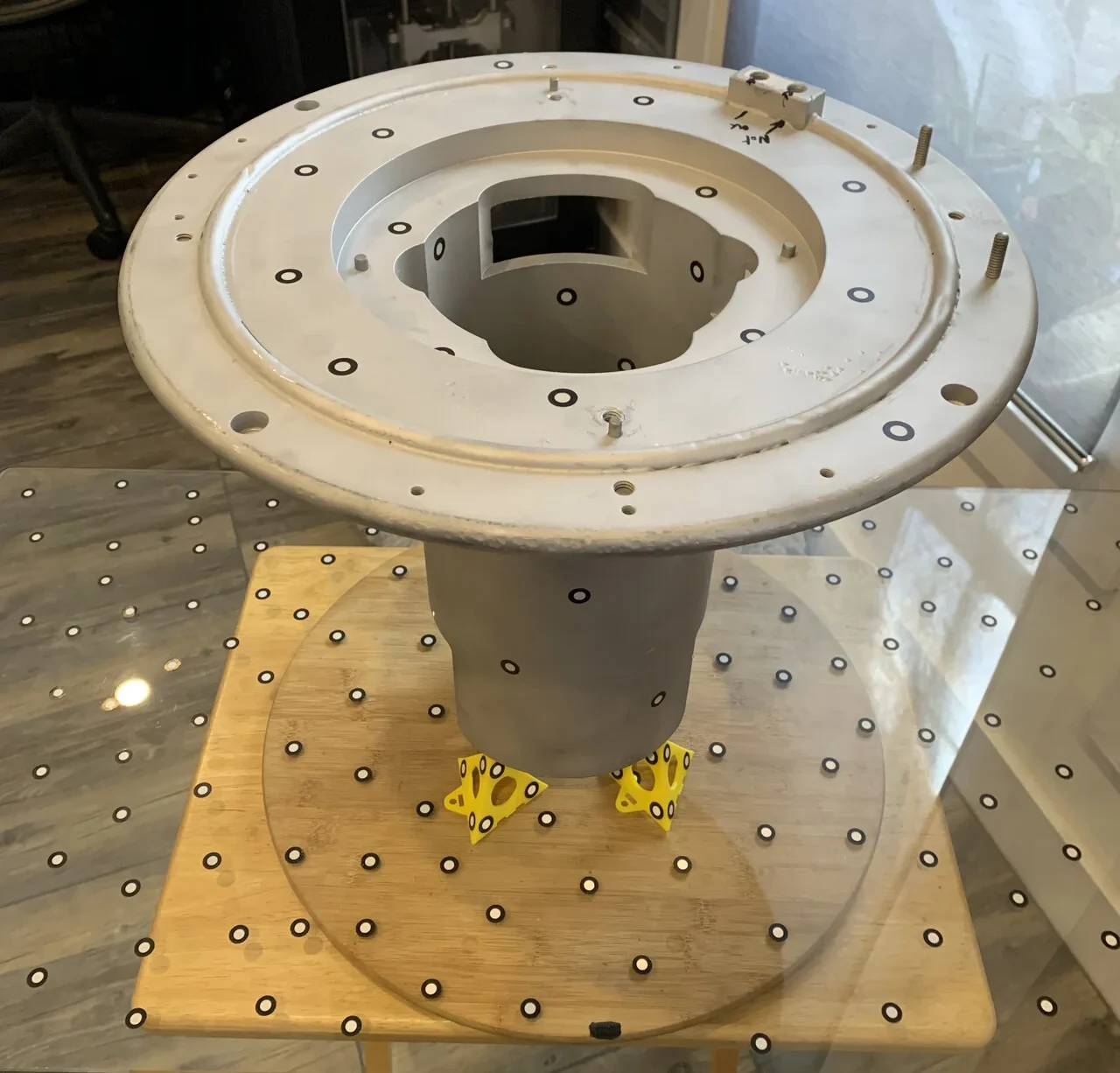
Integrated with 3D Scanning Services: We capture high-fidelity raw data and immediately move into inspection to verify as-built conditions against design intent.
-
Part of Reverse Engineering: During the reconstruction of legacy parts, we use metrology to validate that our new digital models are faithful to the original physical geometry.
-
Supporting Design & Engineering: We provide iterative inspection during the prototyping phase, ensuring that CNC machined or 3D printed components meet functional tolerances before final assembly.
The Strategic Value of Metrology & Inspection
High-precision manufacturing requires more than just accuracy. It requires risk mitigation. By integrating inspection early in the production cycle, you ensure that results are achieved on schedule while preventing the financial losses associated with defective production runs.
When To Use Metrology Inspection
- Tolerance Verification: A part must meet strict engineering tolerances before final approval.
- CAD-to-Part Comparison: You are comparing manufactured components to original CAD models to identify deviations.
- Reverse Engineering Validation: You are reproducing a legacy component and need to verify the accuracy of the new digital model.
- Prototype Validation: You need to confirm the geometry of a prototype before investing in high-volume scaling.
- Critical Fitment: Your project involves complex, organic geometry or assemblies where precise fitment is non-negotiable.
Why is First Article Inspection (FAI) Important?
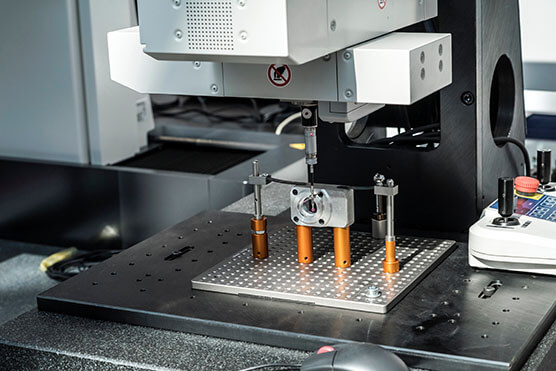
First Article Inspection is the ultimate safeguard for your manufacturing yield. By validating the very first manufactured part against your original design specifications, we catch dimensional errors before full-scale production begins.
- Cost Avoidance: FAI prevents the massive retooling and scrap costs associated with undetected errors in the initial setup.
- Process Confidence: It confirms that your CNC machining or molding processes are correctly dialed in for repeatable, long-term success.
- Time Efficiency: Early corrections reduce manufacturing risks, ensuring your project stays on schedule and avoids downstream delays during installation.
Why Choose Kemperle Industries?
Many inspection services operate in isolation. We don’t. Because we work across 3D scanning, CAD design, and fabrication, our inspection process is directly connected to how parts are actually made.
-
Integrated Workflow: Inspection aligned with real-world production.
-
High-Fidelity Data: Accurate scan capture enables precise comparisons.
-
Complex Geometry Expertise: Ideal for irregular, organic, or legacy parts.