Ship Rudder 3D Scanning:
USCG Cutter Eagle
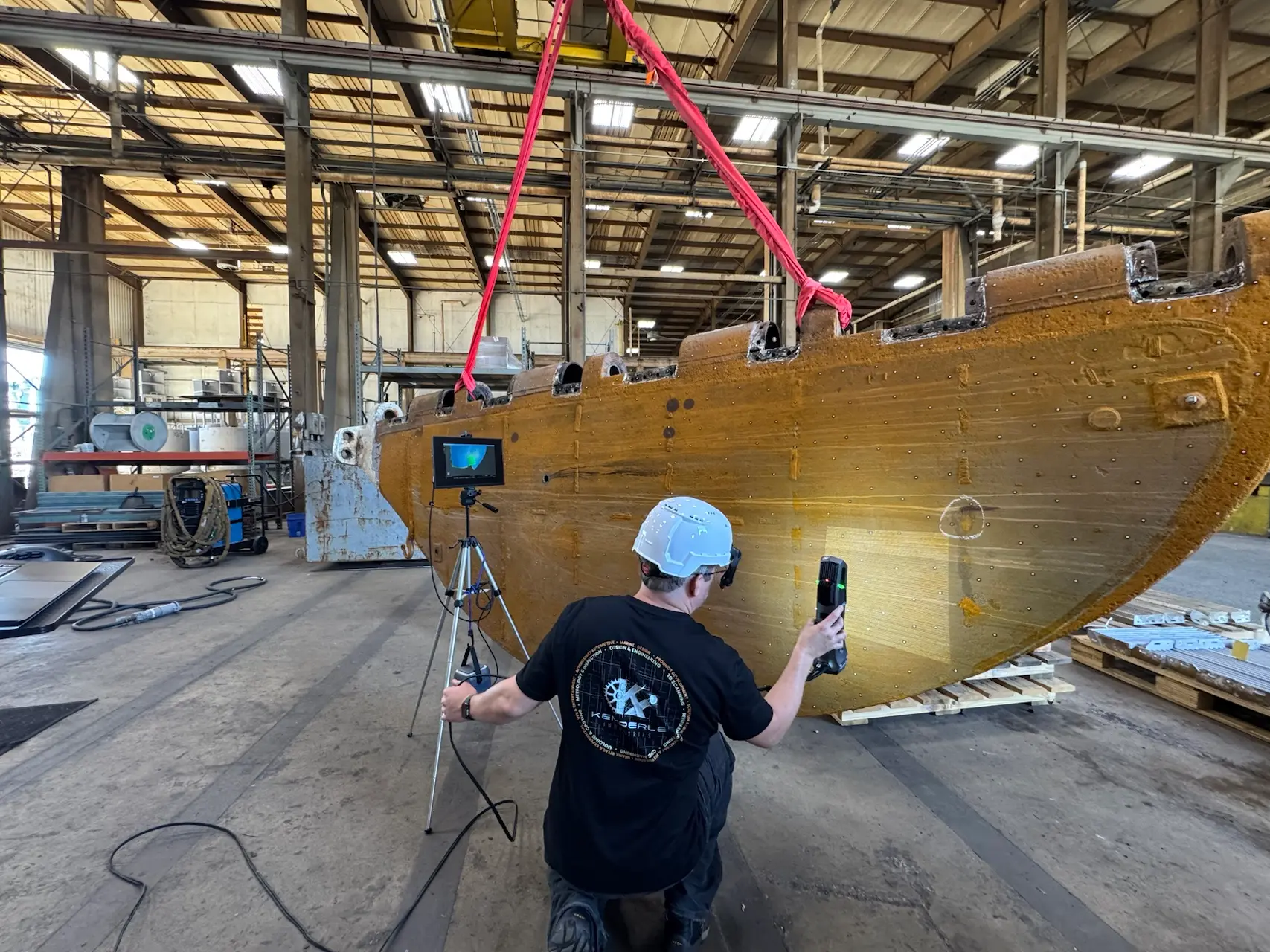
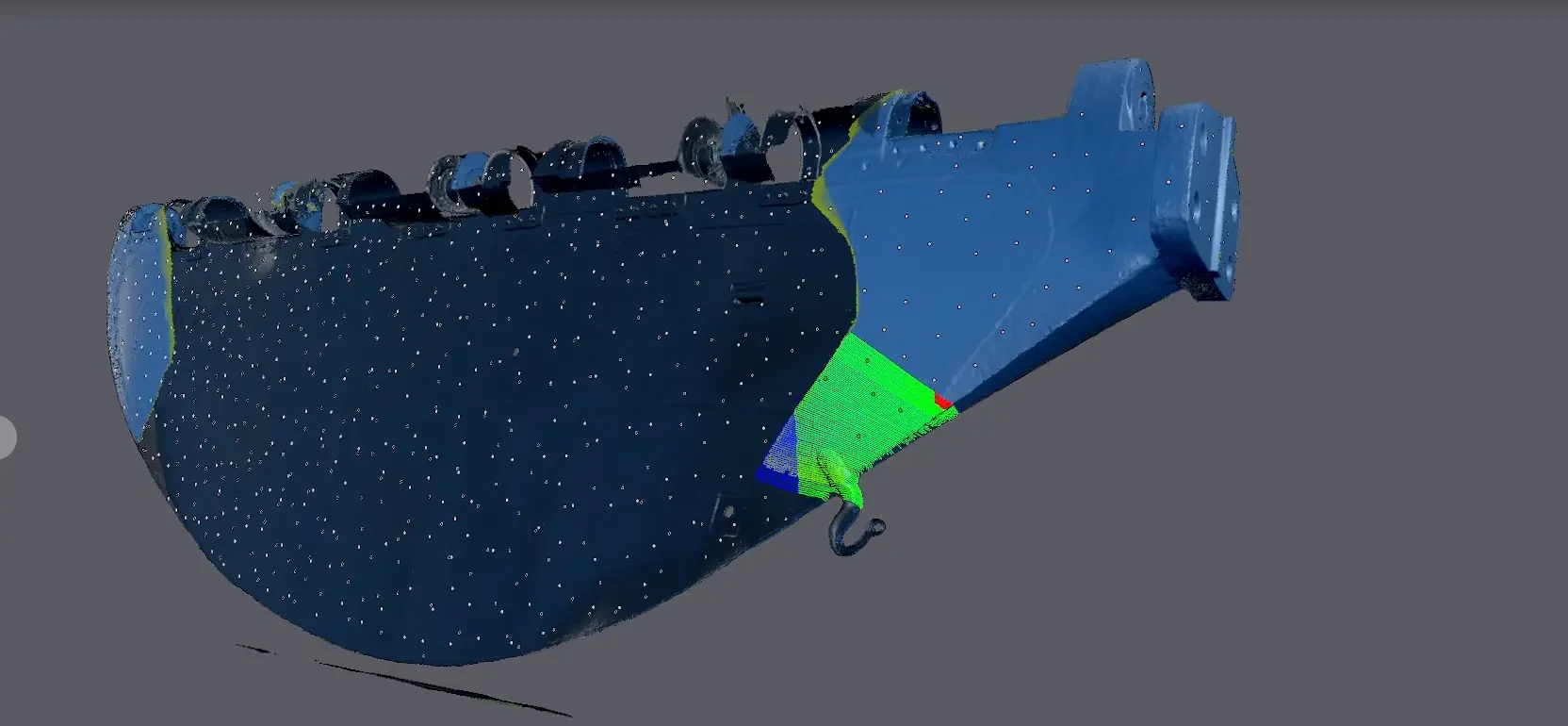
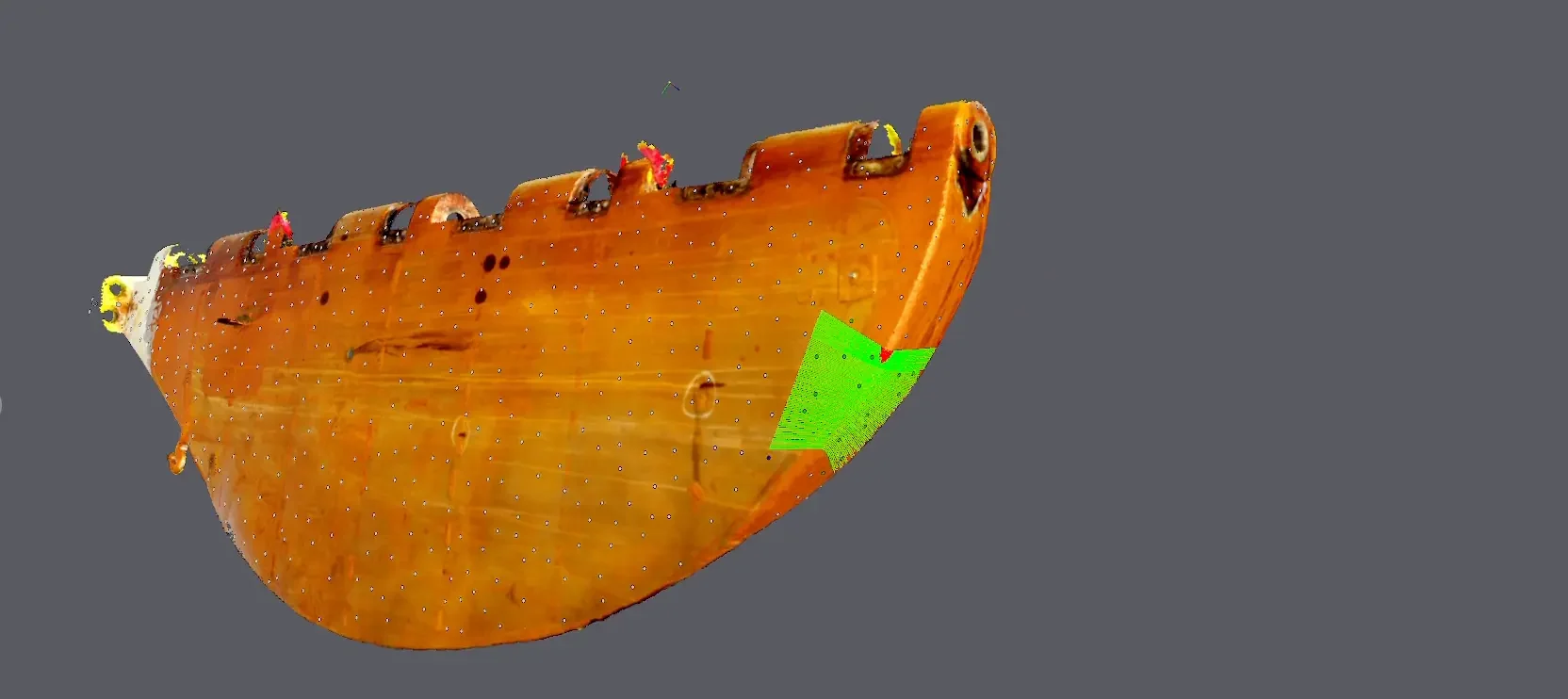
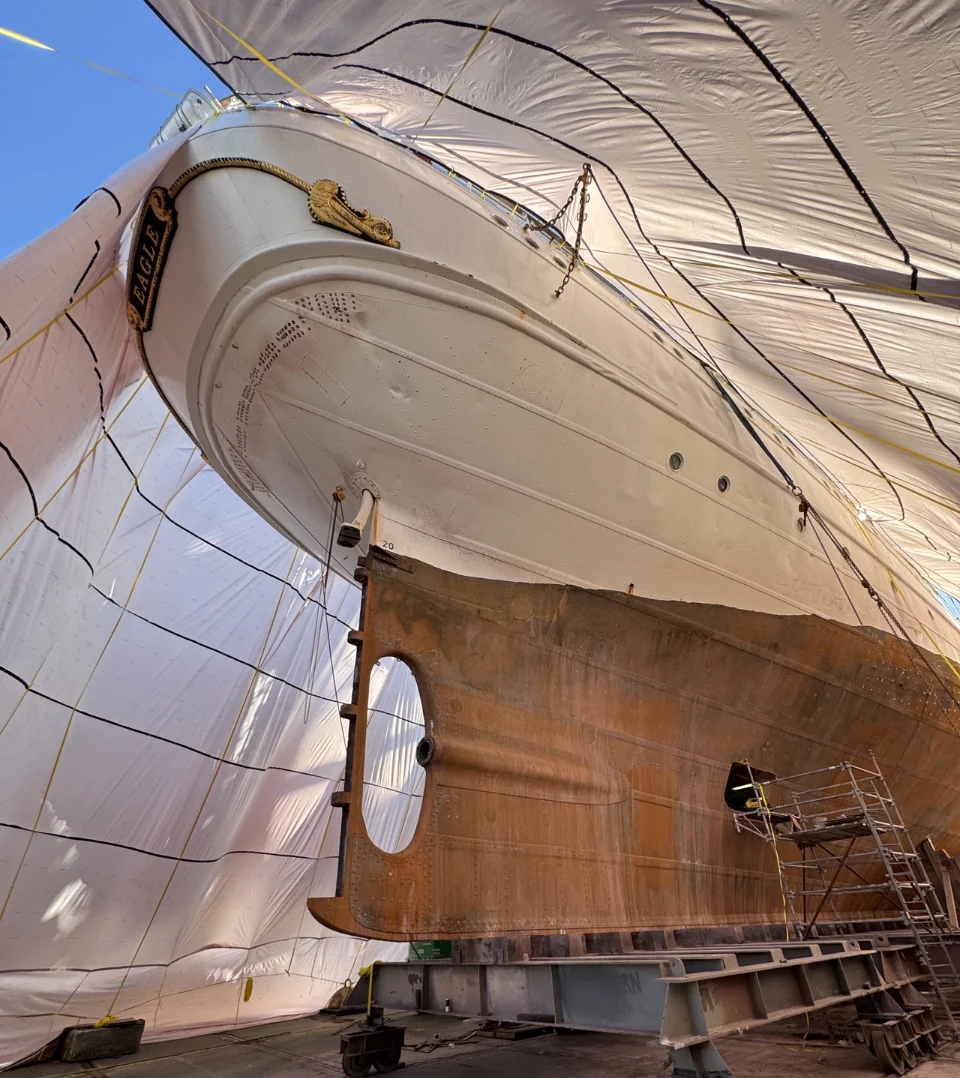
Since 1936, one rudder has steered USCG Cutter Eagle, and it has never been replaced. The Coast Guard’s engineers needed an accurate digital twin of the rudder in order to reverse engineer it and, in the future, manufacture a replacement. Our team brought ship rudder 3D scanning to the U.S. Coast Guard Yard in Baltimore to capture the rudder in its current state and deliver a clean STL.
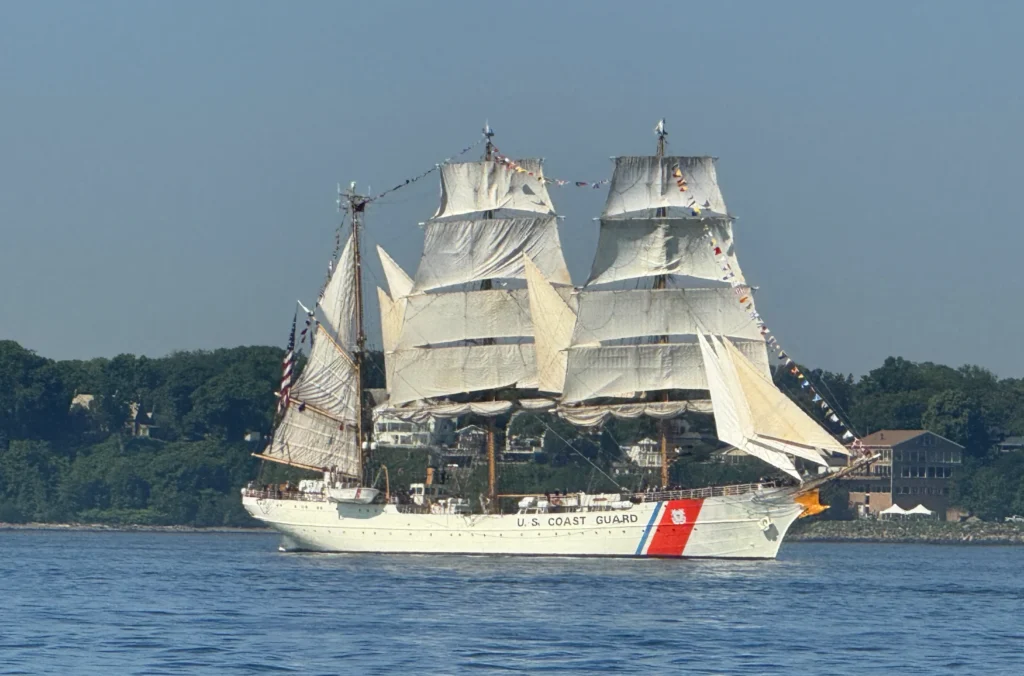
USCGC Eagle, known as “America’s Tall Ship,” is a 295-foot, three-masted barque that trains future Coast Guard officers. She was built in 1936 at the Blohm+Voss shipyard in Hamburg, Germany, and commissioned as Horst Wessel, one of three sail-training ships the German navy operated before World War II. Today she is the only active square-rigger in U.S. government service.
Getting her to America took some diplomatic negotiating. When the war ended, four German sailing ships were up for division among the victors, split into three lots drawn by the Soviet Union, Great Britain, and the United States. Before the results of the draw were officially announced, the U.S. representative persuaded the Soviets to trade draws, securing the ship for the U.S. as a war reparation instead. On May 15, 1946, the Coast Guard commissioned her as Eagle, the seventh cutter to carry the name in a line that goes back to 1792. A Coast Guard crew, aided by the German crew still on board, sailed her from Bremerhaven to New London, Connecticut, which has been her permanent home port ever since.
She was built to last. Her steel hull is four-tenths of an inch thick, with two full-length steel decks and three inches of teak over steel on the weather decks.
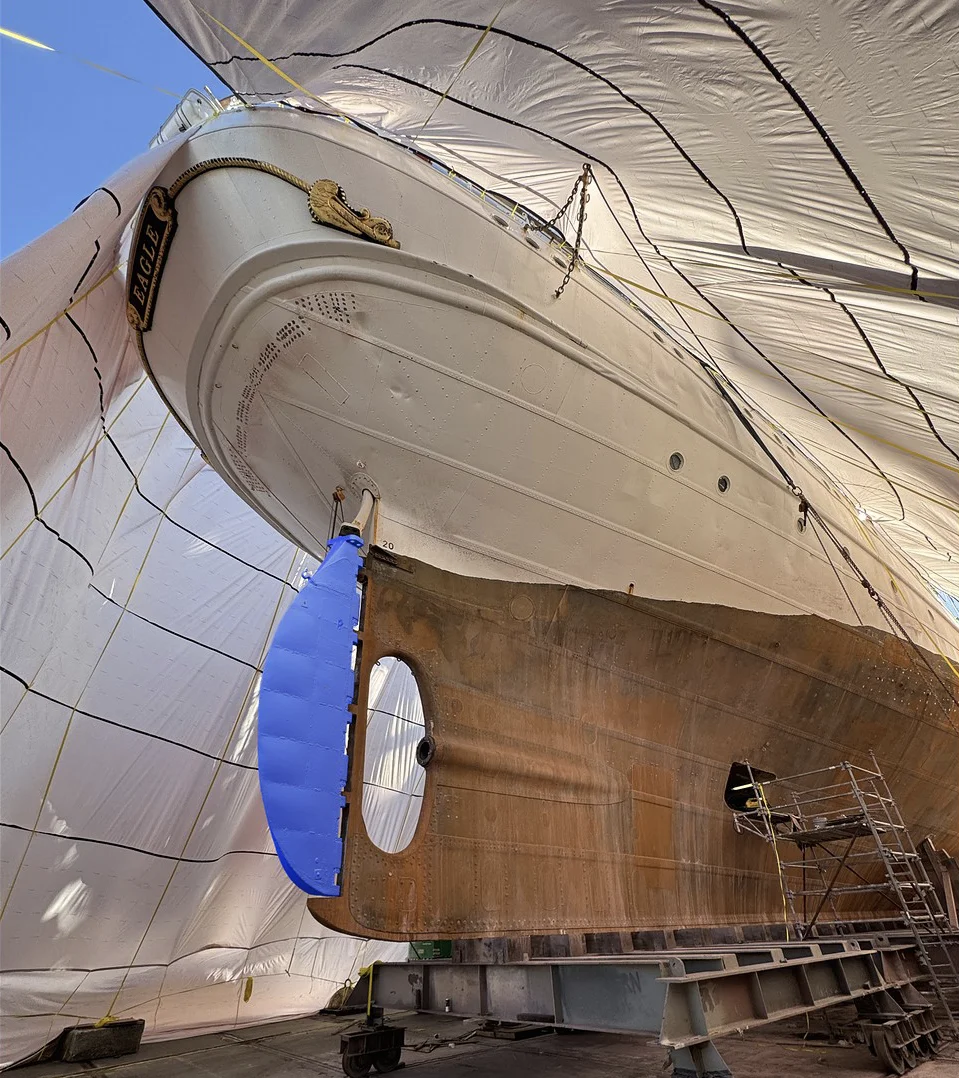
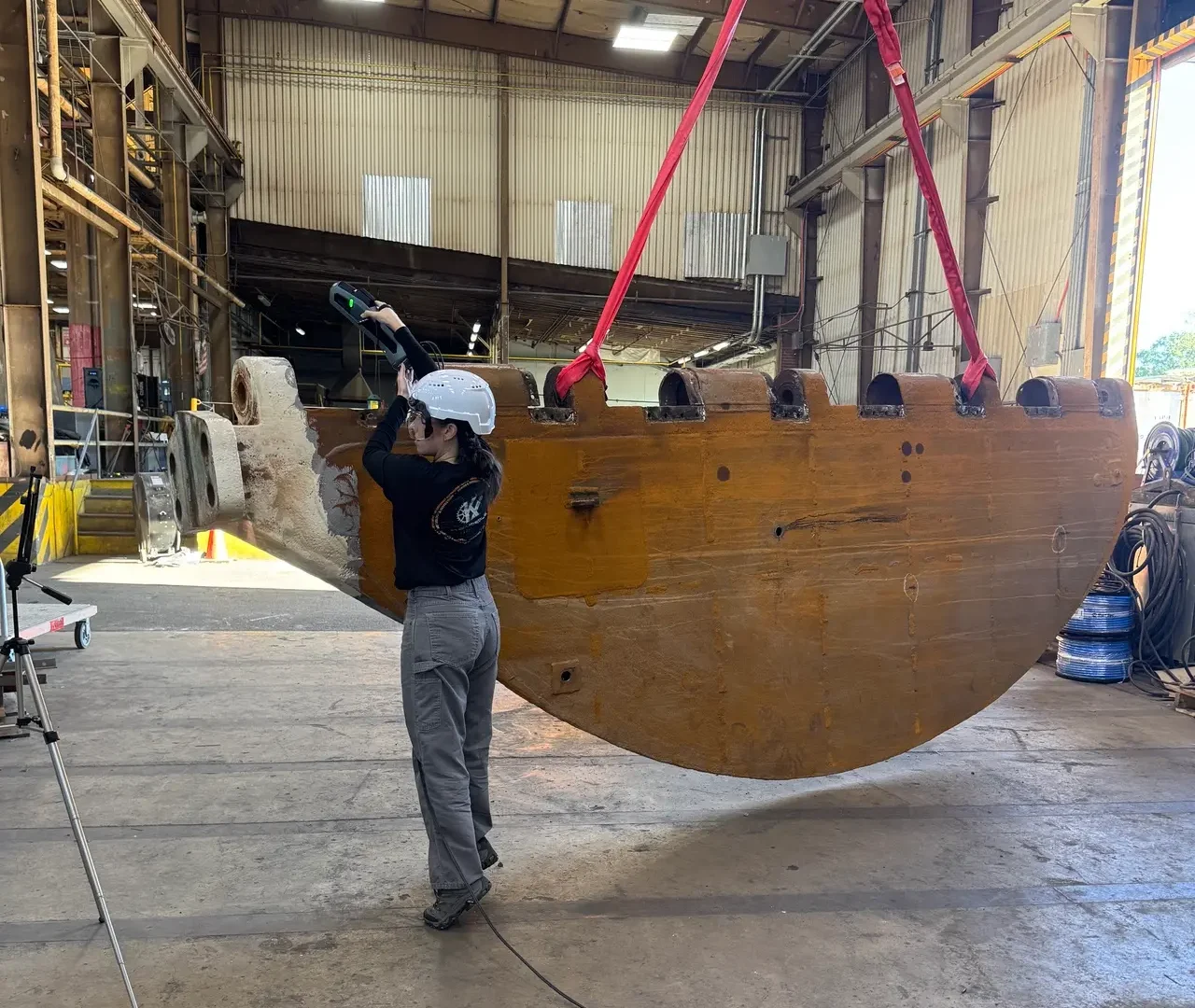
A scan only captures what the scanner can see, so the first challenge was access. To capture as much of the rudder as possible in a single pass, including the narrow edge of the blade, we could not leave it sitting on the floor.
Lifting it created a second challenge. Suspension straps hide the surface behind them, and anything the scanner cannot see is missing from the final file. The deliverable had to be clean, with no straps anywhere in it.
SETUP: We settled on suspending the rudder from two gudgeon sockets with straps, about 1.5 feet off the floor, which gave us access to the narrow edge of the blade.
TARGETS: Because the rudder is steel, we used magnetic targets. They let us build a strong target map to work from.
SCANNING: With that setup in place, the 3D scan itself was straightforward. It took roughly a day on site, including setup and a few test scans. We also made an extra pass to capture color.
EXTERNAL HINGE: We removed the straps from the two gudgeon sockets and scanned the external hinge area separately, then merged it with the rudder data. The final model has no suspension straps in it.
The Coast Guard’s engineers received a clean STL of the rudder, ready for reverse engineering. From scan day to delivered file took five days: the scan itself, a day of travel, and three days to process and deliver.
The file is meant to be the starting point for reverse engineering the rudder and, eventually, manufacturing a replacement. It gives that work an accurate digital record of the original rudder as it exists today.
Have a part that has to be documented before it can be reverse engineered or replaced? Call 718-557-9578 or send us the details on our Contact Us page.