Ferrari F355 GTS
Subwoofer Enclosure
From no subwoofer to a sealed enclosure built to Audison's spec
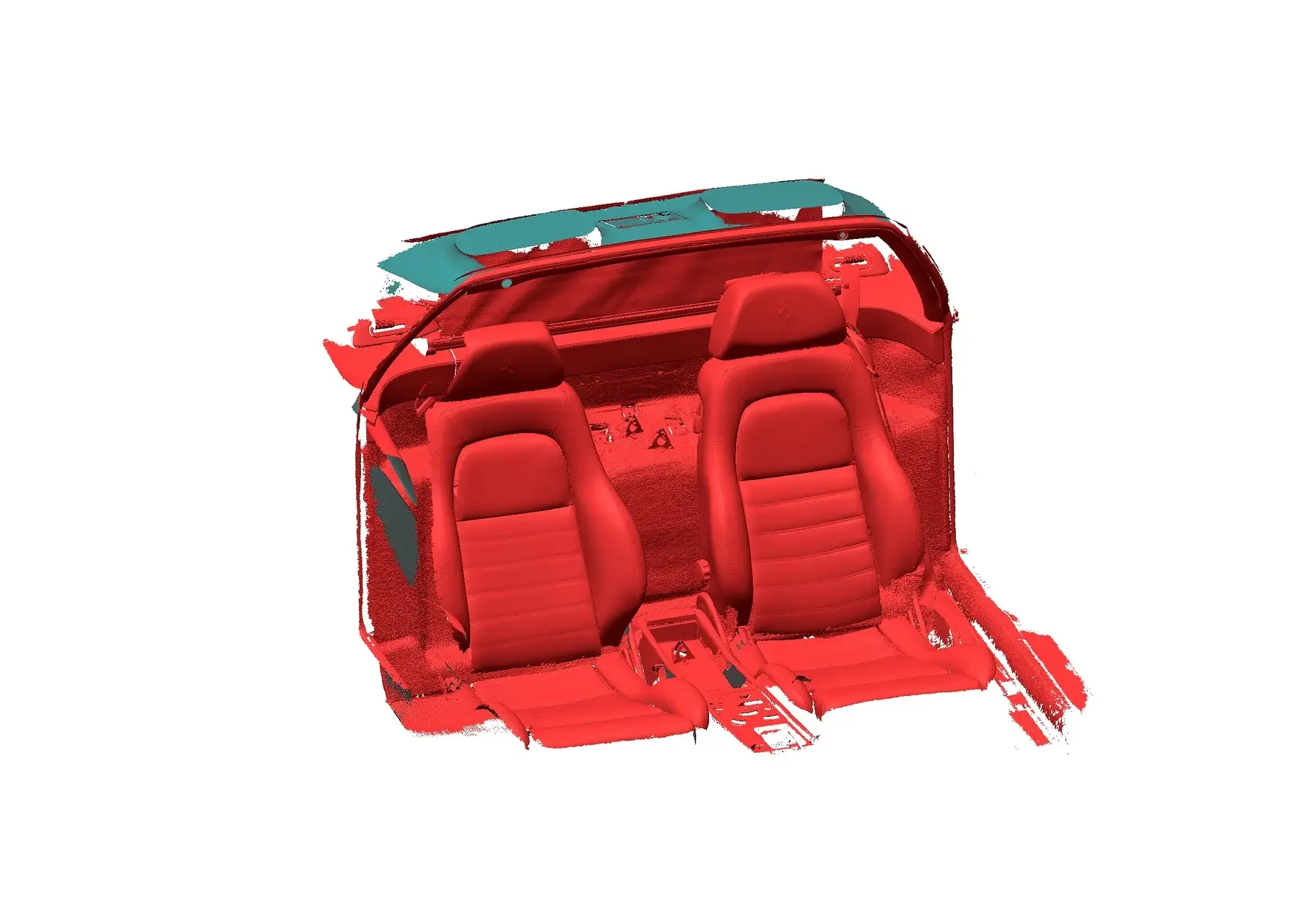
This F355 GTS came from the factory without a subwoofer.
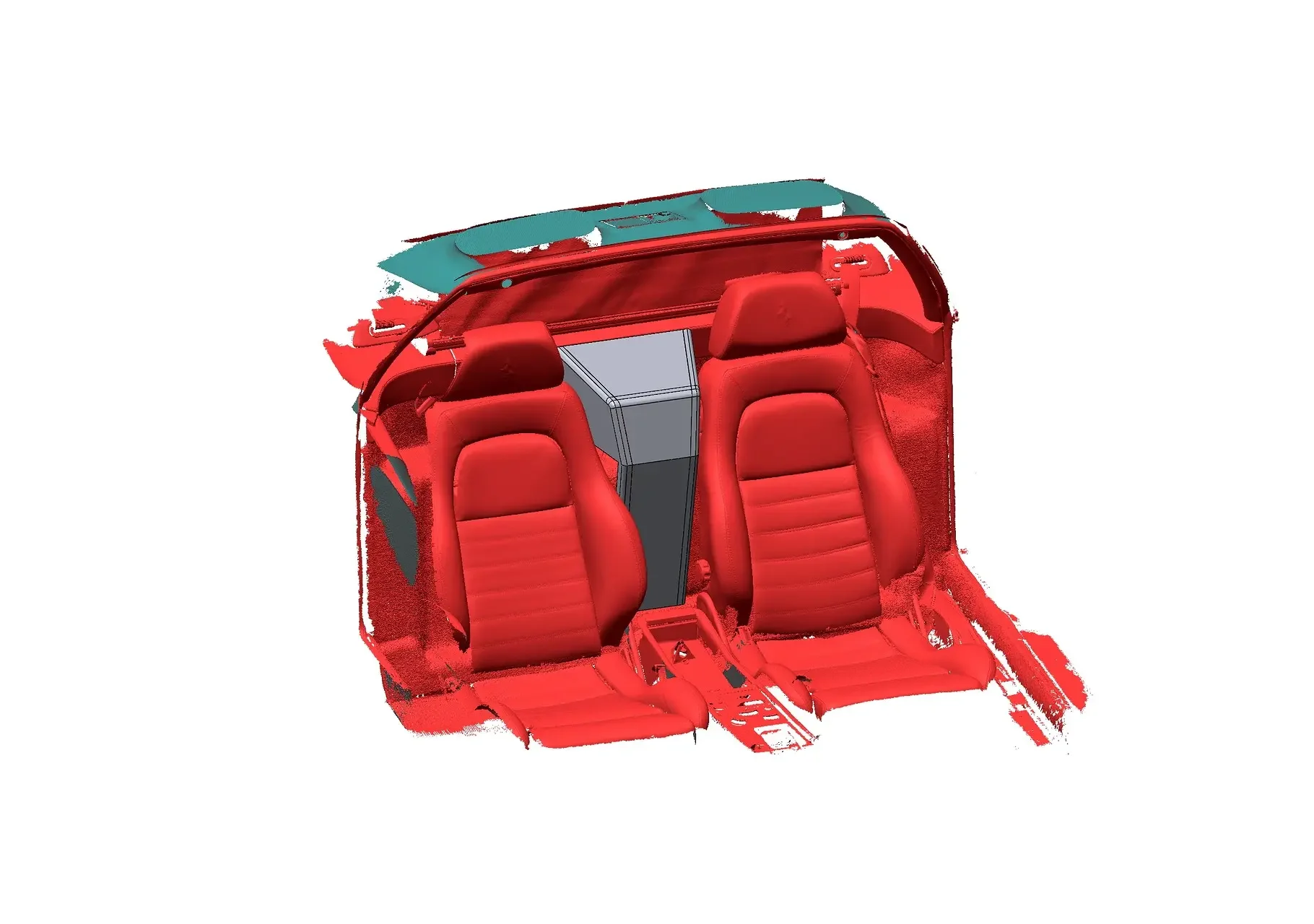
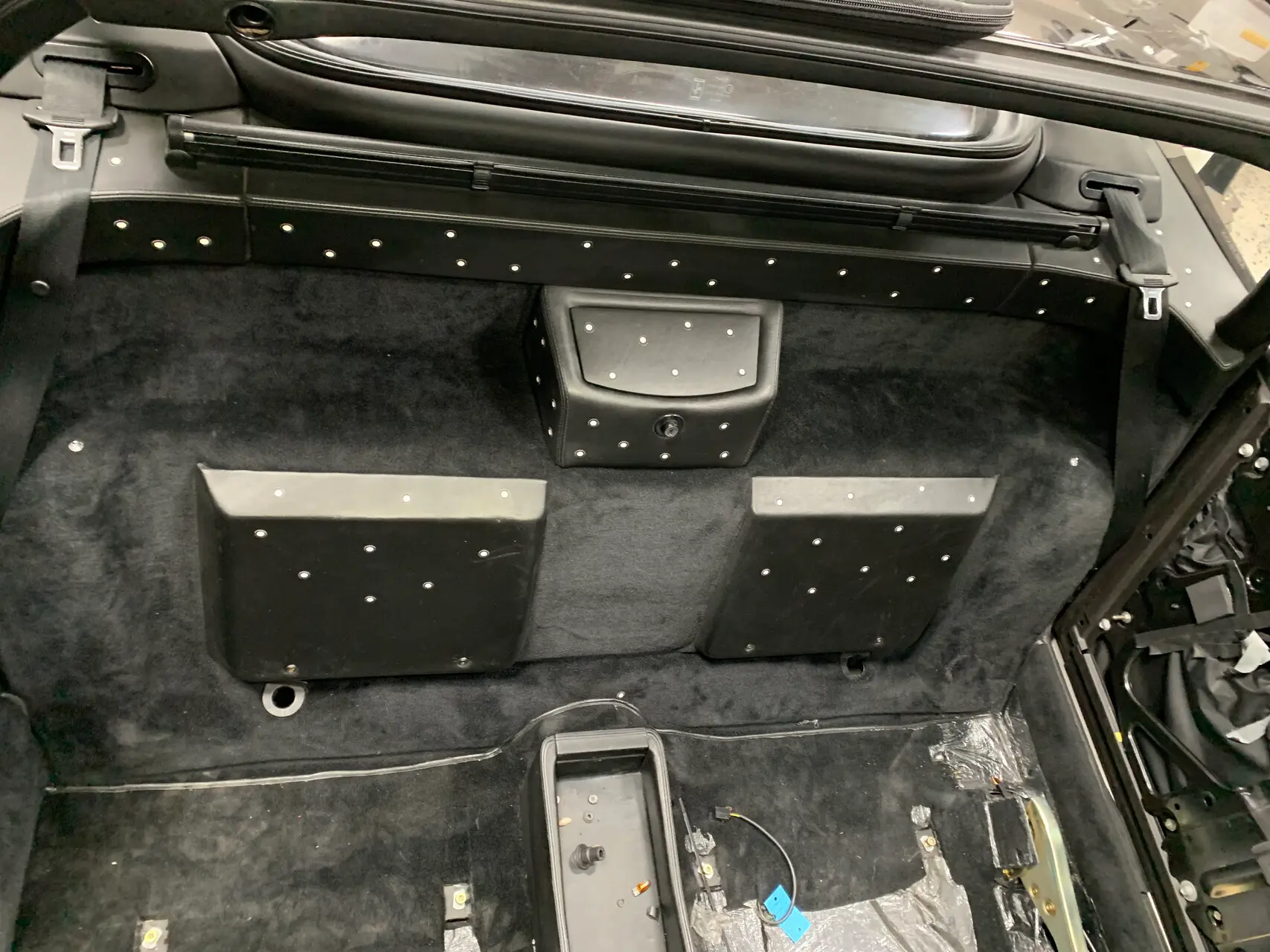
This Ferrari F355 GTS subwoofer enclosure was designed for the rear deck behind the seats, to look like part of the car and to reach the internal volume Audison specifies for its driver. It was built from a full 3D scan, verified digitally, and test-fit in the car with no changes to the bodywork.
No Factory Sub, Limited Room Behind the Seats
The factory audio in this F355 GTS was a set of mid-bass drivers in the front doors and tweeters near the dash vents, with no subwoofer anywhere. The client wanted a fuller sound without changing the car's character, and that shaped the decisions after it: whatever went in had to feel like it belonged to the car.
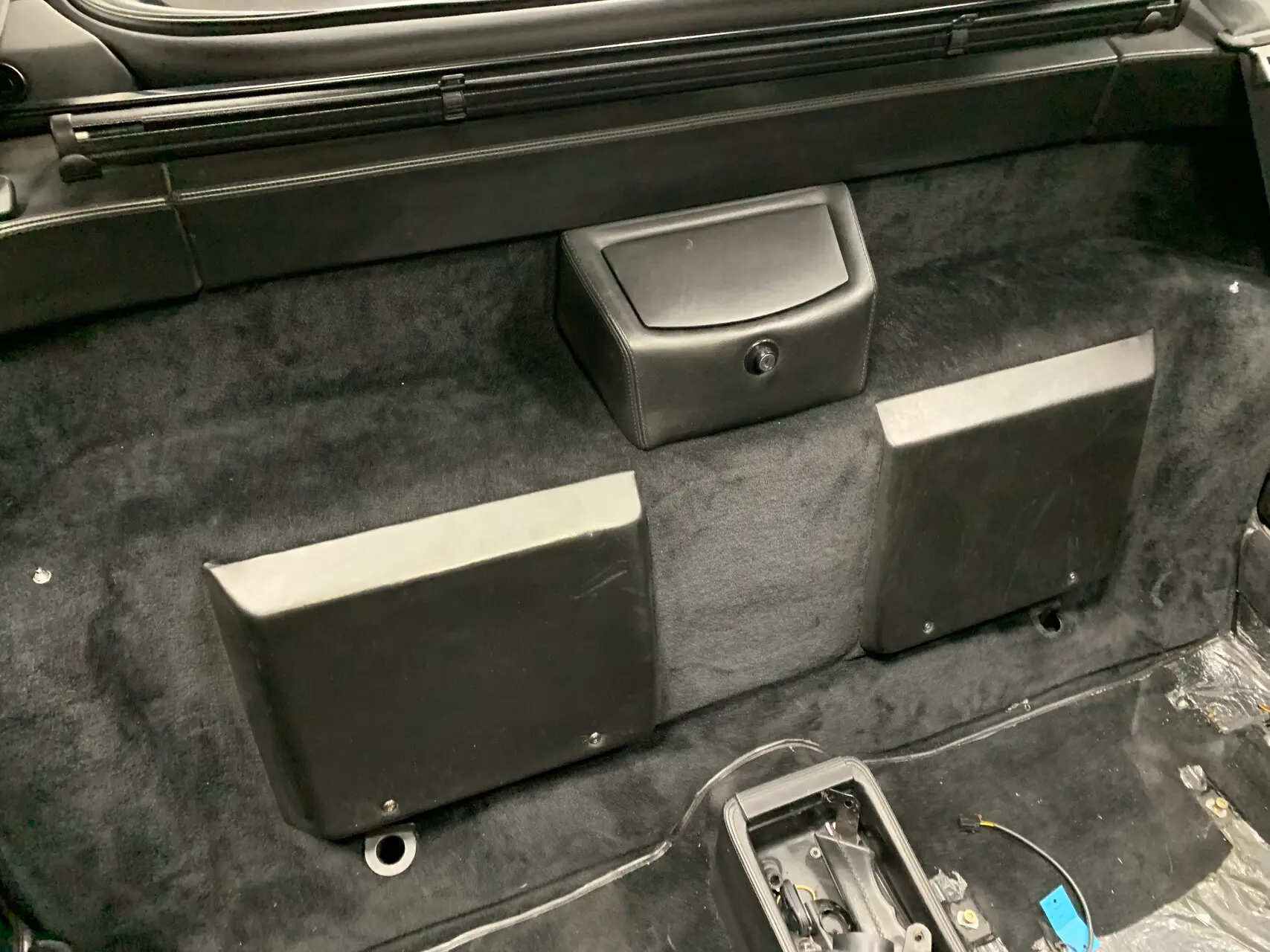
The enclosure had to go on the rear deck behind the seats, and room was limited everywhere in the car. The bodywork had to stay untouched, so the enclosure had to be designed from the car itself.
There was an acoustic requirement on top of the physical one. Audison specifies its Prima APS 8 D for sealed enclosures of 7.5 to 8.5 liters, so the box had to reach that internal volume inside the space the rear deck offered.
- No factory subwoofer in the car
- Limited room on the rear deck behind the seats
- Zero modification to the original bodywork
- Internal volume required to meet Audison's spec
Built to the Car Itself
We started with 3D scanning of the rear deck, using our structured light scanner, rated up to 0.050 mm accuracy. The scan took about 30 minutes. To open up the area, the seats were removed, then scanned individually and added back into the model assembly, so the design accounted for the seats as well as the deck.
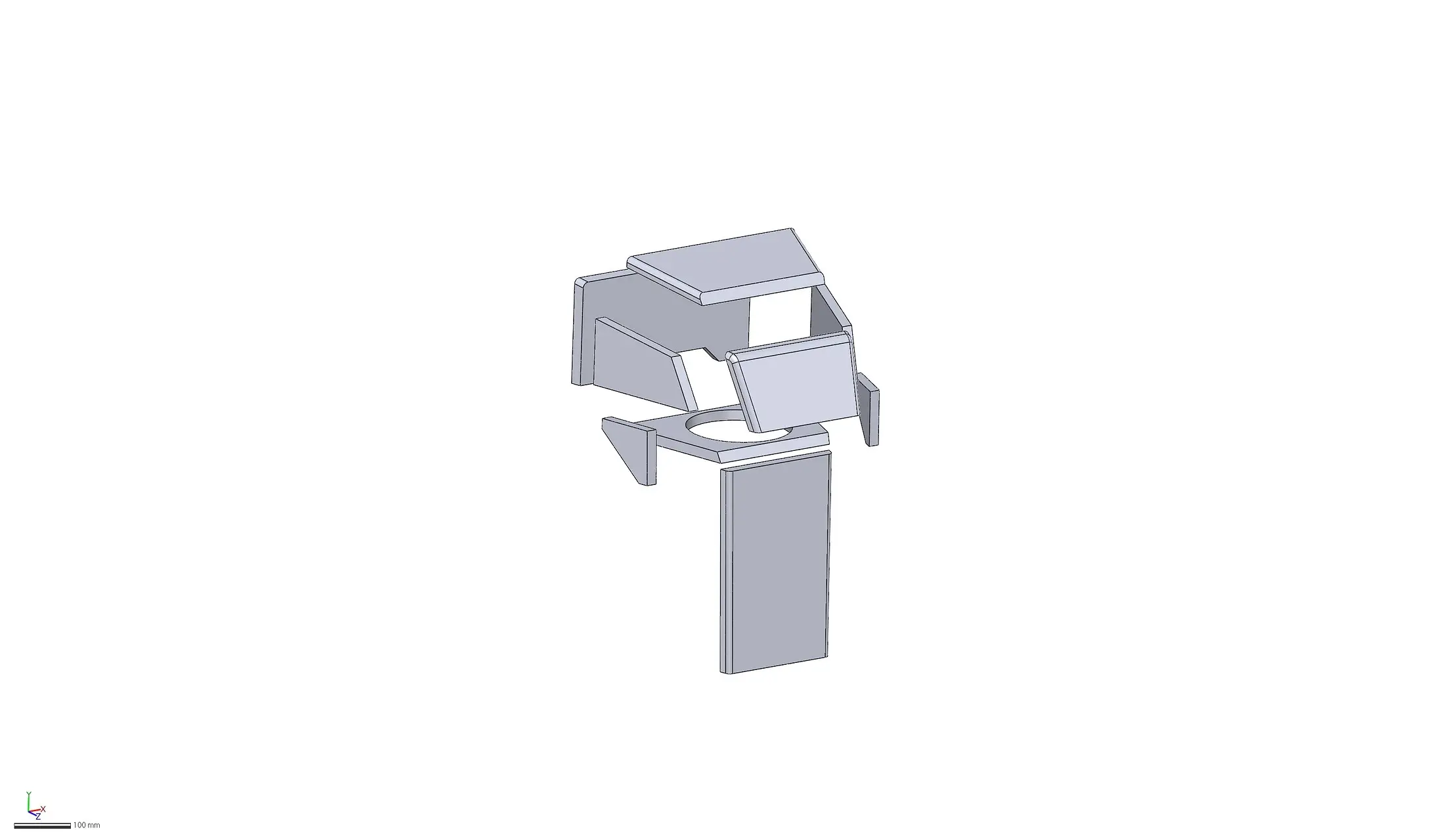
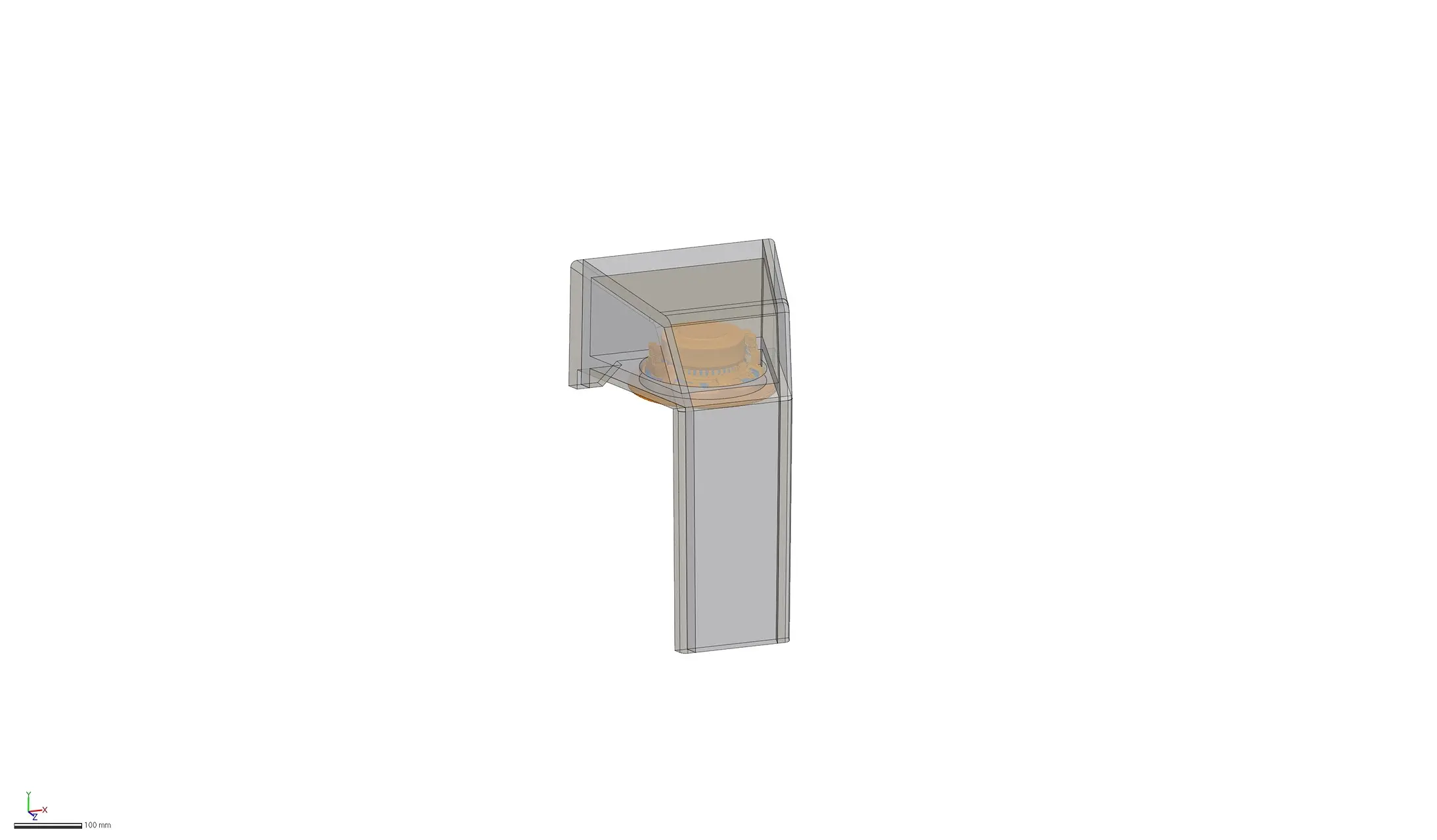
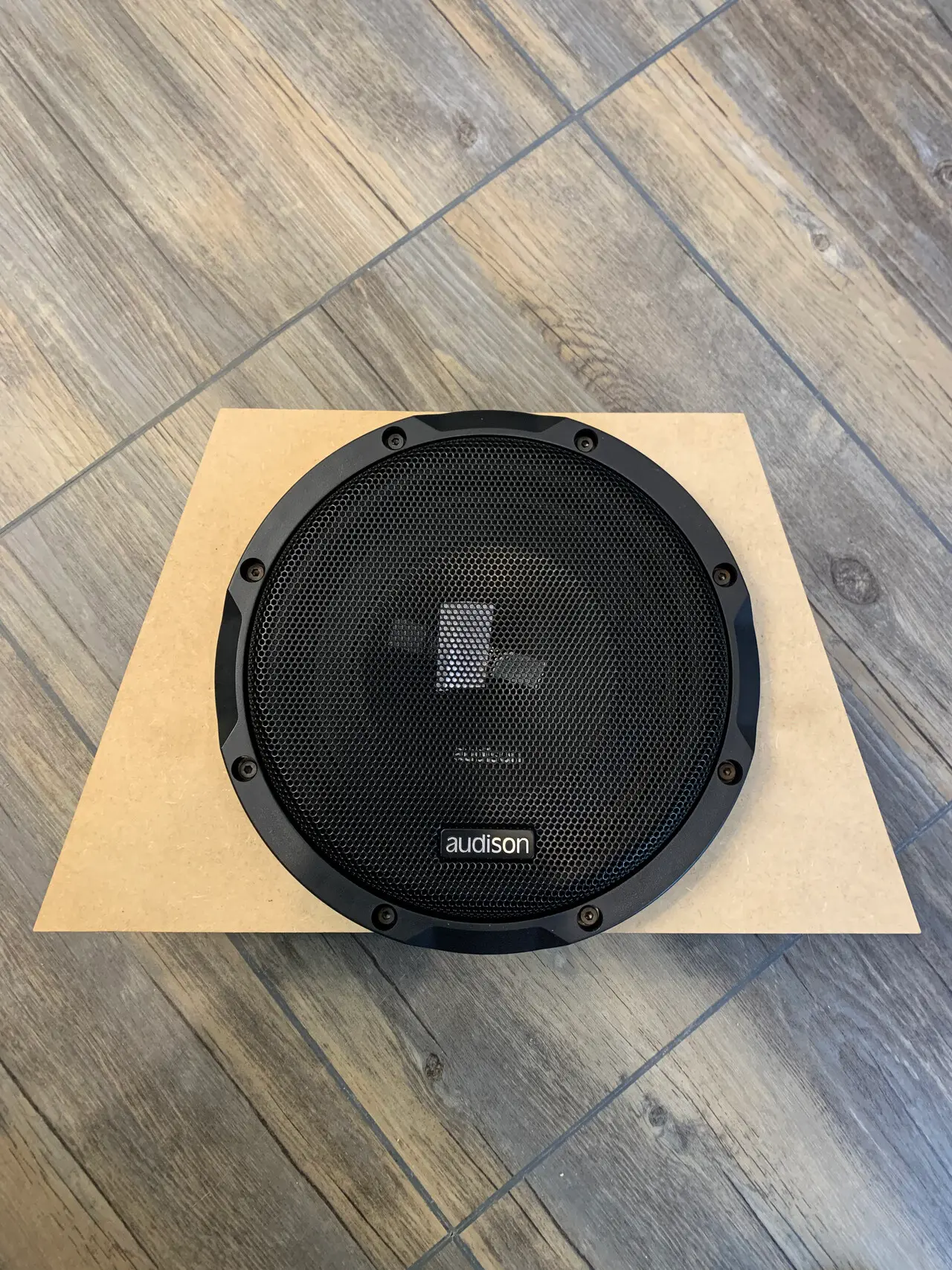
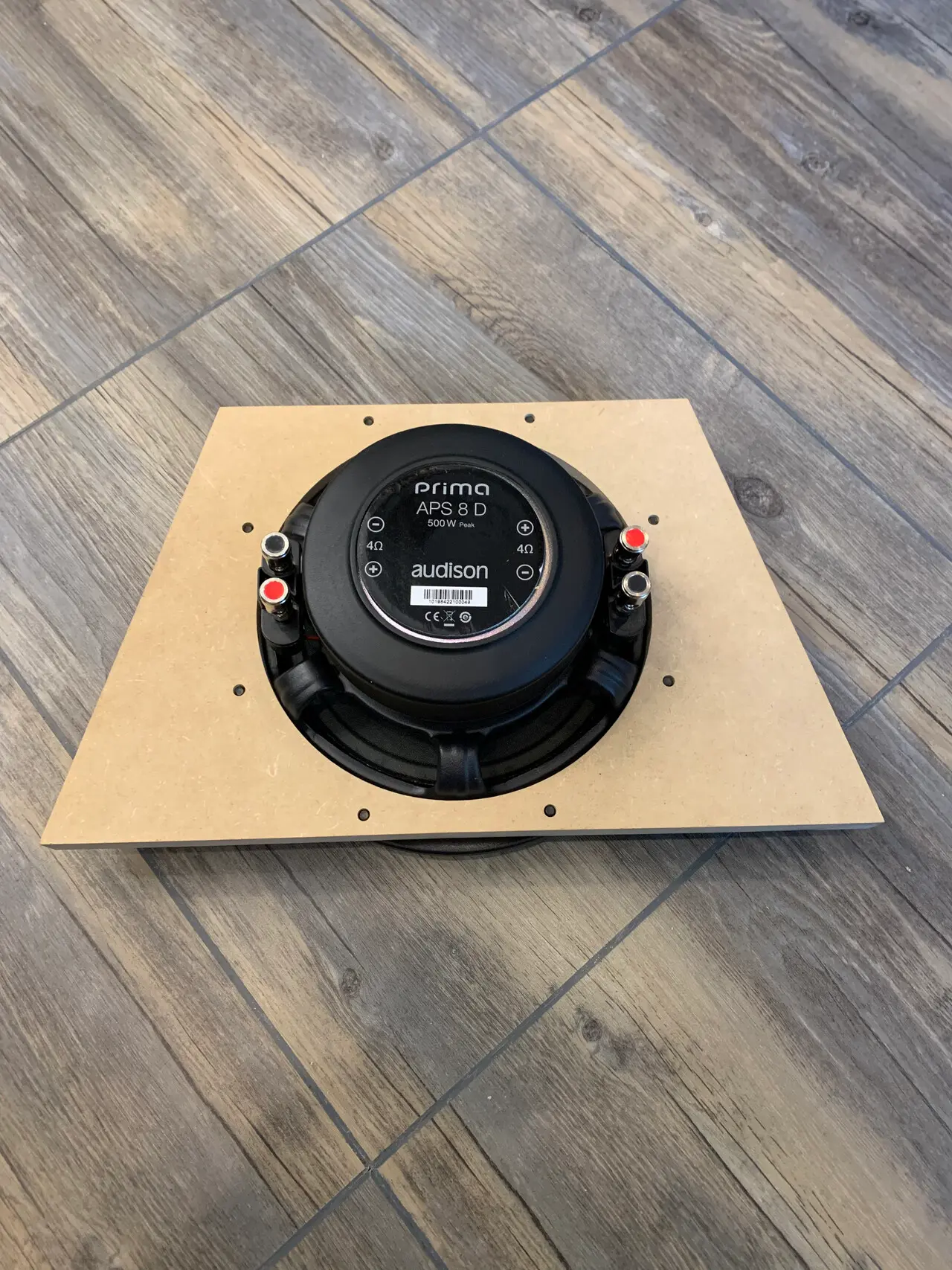
The enclosure was modeled in Geomagic Design X and then brought into SolidWorks, built around an Audison Prima APS 8 D. It is an 8-inch driver that Audison lists at a 79 mm mounting depth and describes as built for high output in tight spaces. The internal volume was calculated in SolidWorks.
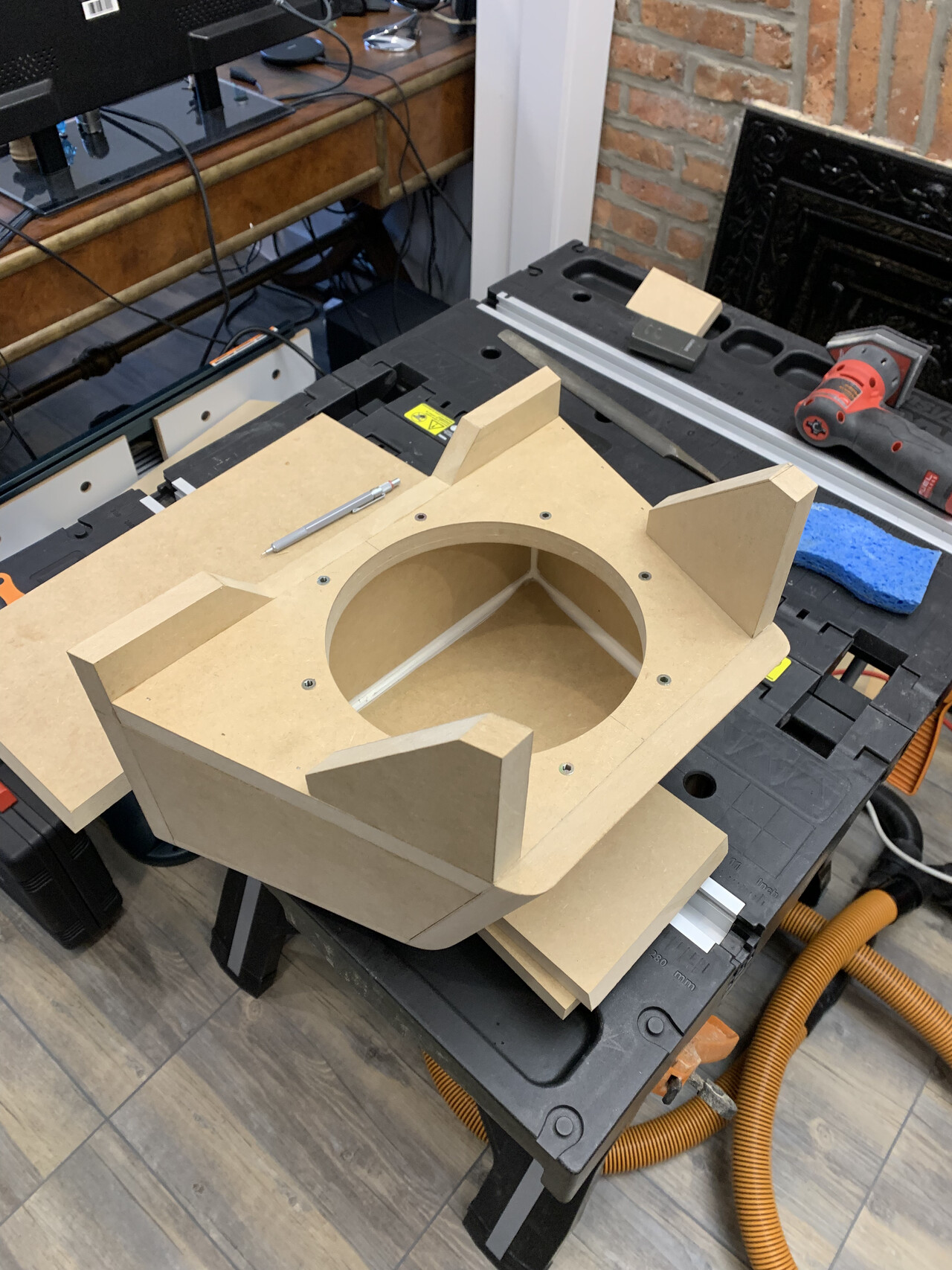
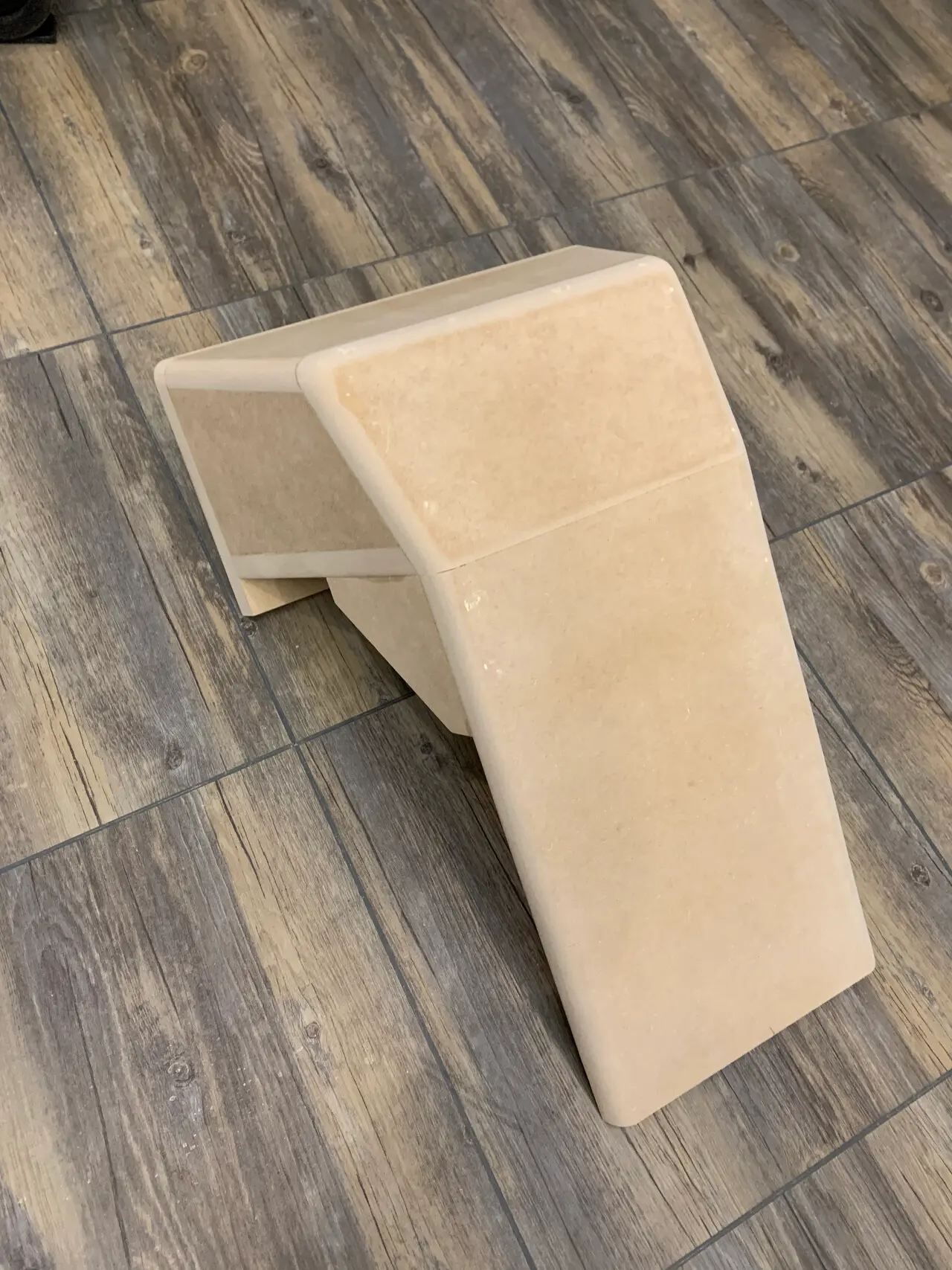
The hardest part of the job was the shape, and we went back and forth on the design several times, mostly because of the speaker's size, before settling on this one. The box had to look like part of the car and still meet the volume Audison specifies for that driver, so the rear of the enclosure tapers outward to hold it. We split the design into nine parts so it would flow with the interior's design, and the parts assemble into a sealed enclosure.
Before anything was cut, we verified the design digitally by laying the CAD data over the actual scan data to check the fit.
We chose 3/4 inch MDF because it is a dense, dead material that suits subwoofer boxes. Cutting used CNC routing and took about an hour in total, including setting up the material on the router and creating the toolpaths.
Assembly was spread across three days. The parts were joined with high-bond glue and a nail gun on the joints, which makes a secure bond without screws, and the inside seams were sealed with silicone.
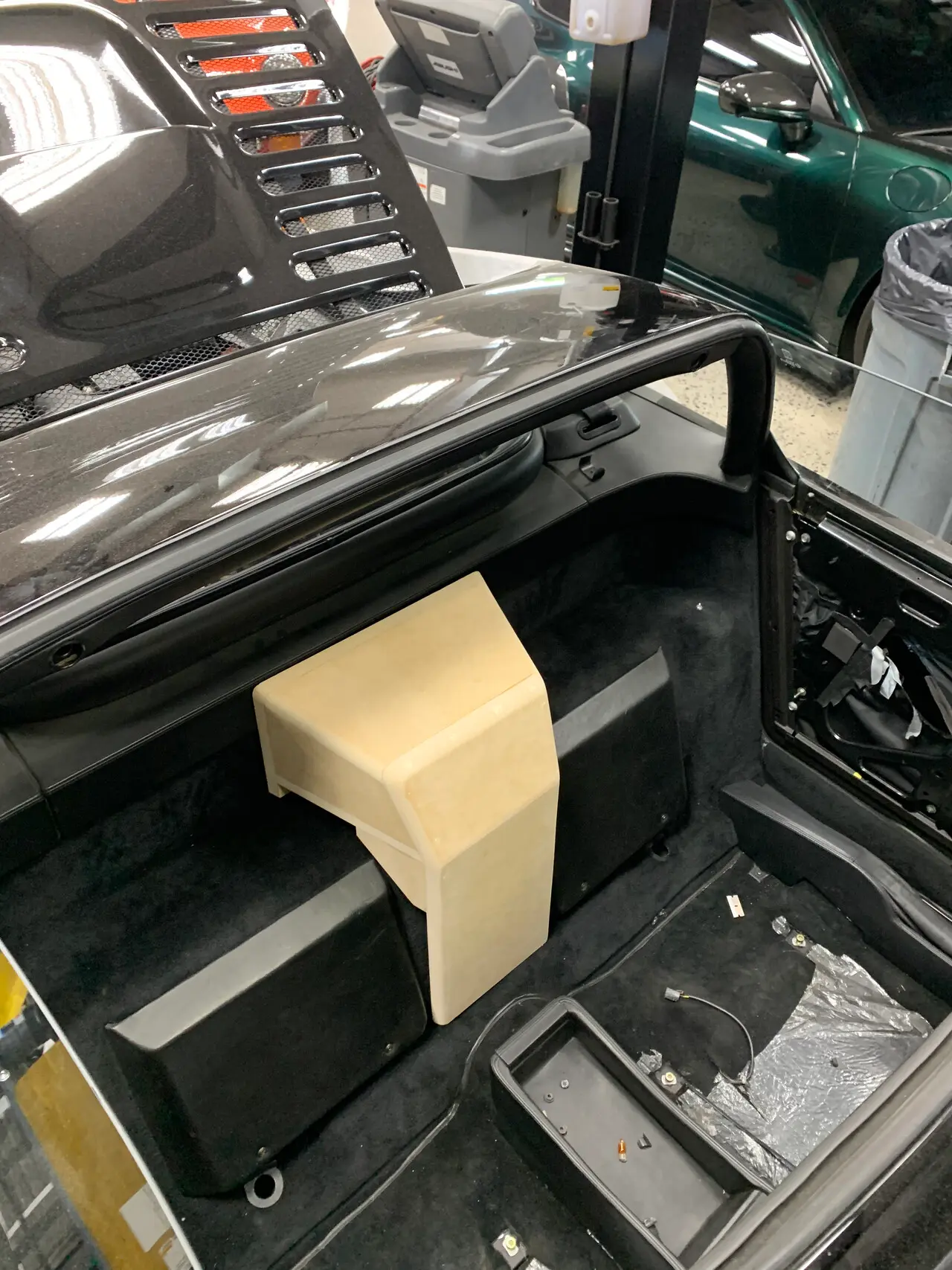
We test-fit the enclosure in the car with no adjustment needed. High-strength Velcro holds it to the rear shelf and the bottom, and it sat stable.
- Full 3D scan of the rear deck in about 30 minutes with a scanner rated up to 0.050 mm accuracy
- Seats scanned individually and added back into the model assembly
- Nine 3/4 inch MDF parts, CNC routed in about an hour and verified digitally against the scan
It looks like Ferrari made it themselves. That’s exactly what I asked for.
Private Client, Ferrari F355 GTS OwnerDelivered Ready for Upholstery
The test fit confirmed the placement and that the enclosure did not interfere with anything in the car. Zero modification to the original bodywork was needed, and the enclosure attaches with Velcro rather than bolts.
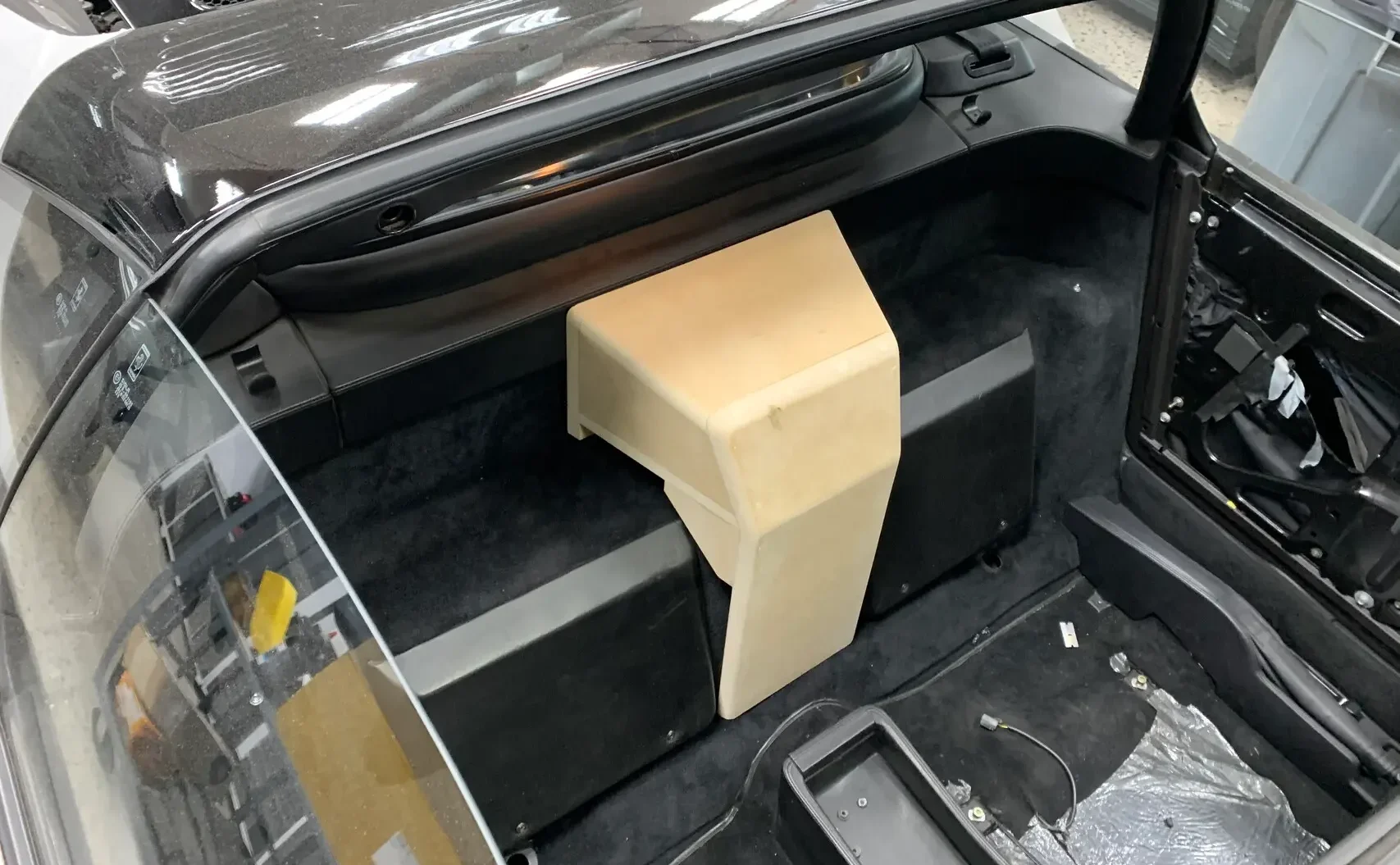
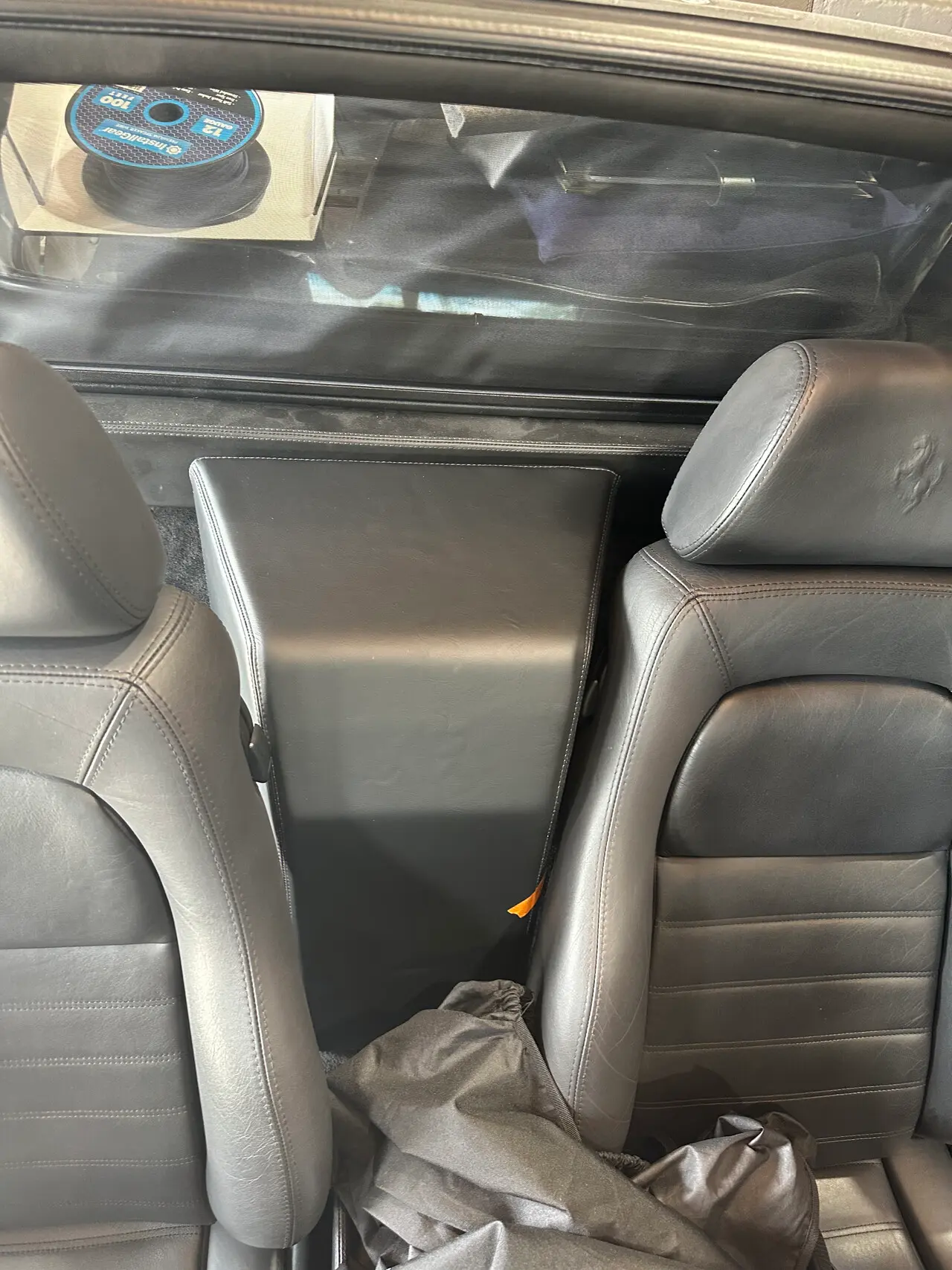
We left the enclosure surface bare and clean and delivered the enclosure, and another party upholstered it. The project took two weeks.
On this job we scanned the rear deck and seats, designed against the scan, and verified before cutting. It is the kind of aftermarket automotive fabrication we do.
- Built for the rear deck behind the seats
- Zero modifications to the car's original bodywork
- Verified digitally, then test-fit with no adjustment
- Surface left bare and clean for the upholsterer
Project Gallery